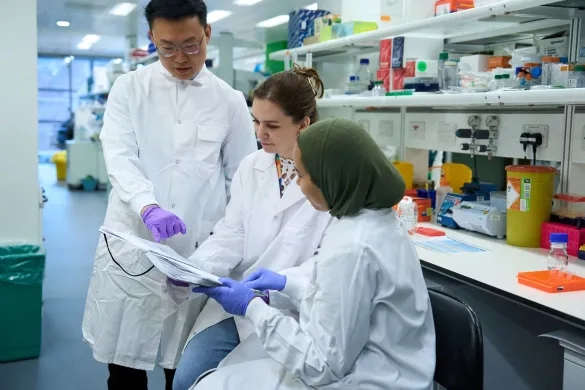
Our research and innovation strategy builds on what’s already been achieved and sets out how we’ll continue to lead the global research effort to make tomorrow’s treatment a reality.
We’ve developed our priorities for the next five years with people affected by MND, health and social care professionals and our research partners, so we know we’re focusing on what really matters.
What we must do
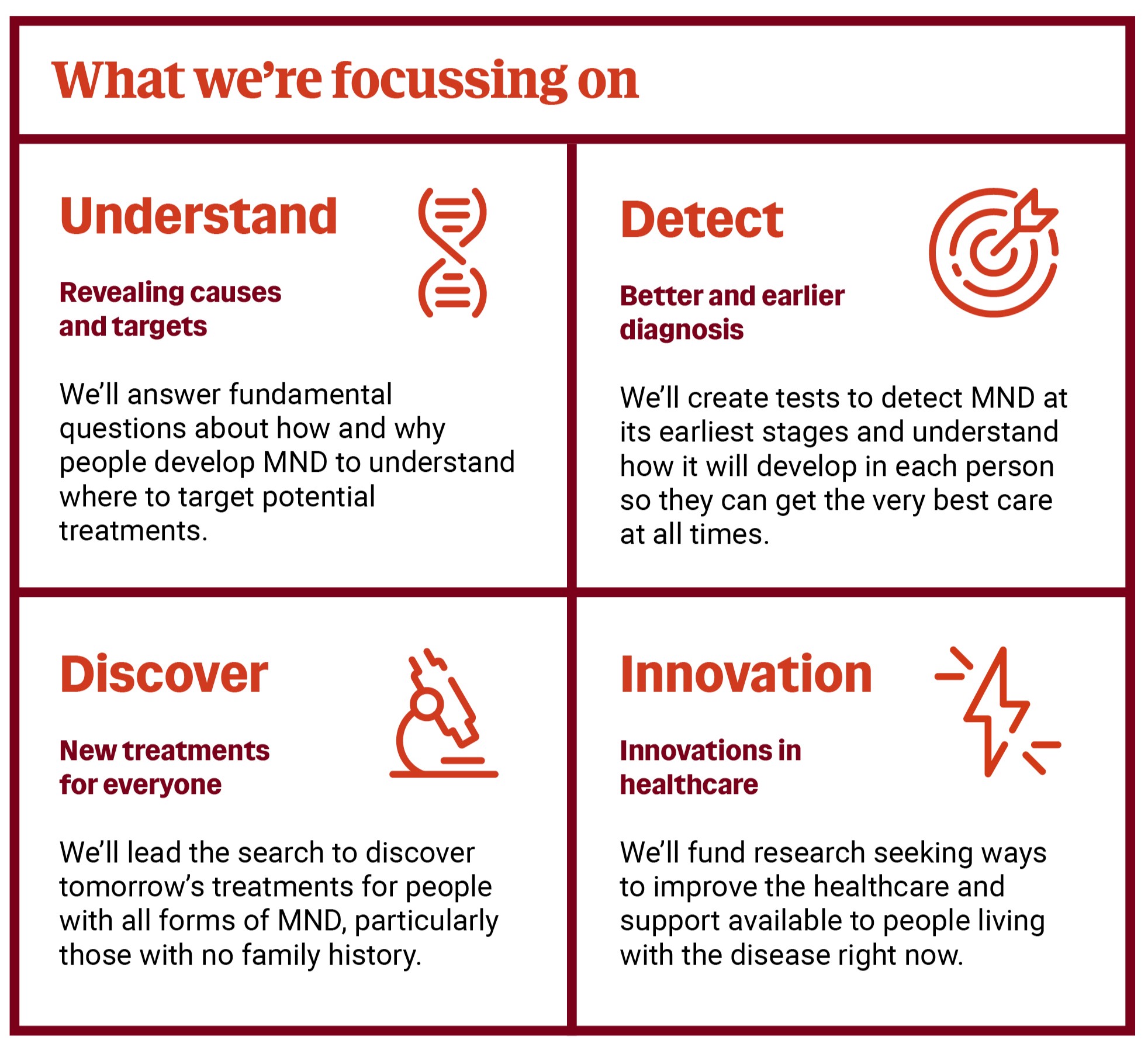
Our strategy is built around four objectives – to understand, detect, discover and innovate – which will change the lives of people affected by MND now, and bring hope for the future.
We’re the leading charity funder of MND research in the UK. But to create the change people affected by MND need, we must do even more. Within five years, we’ll spend at least £20 million every year – investing in brilliant people, world-class research and the most promising innovations.
How we'll work
We’ll widen our gaze
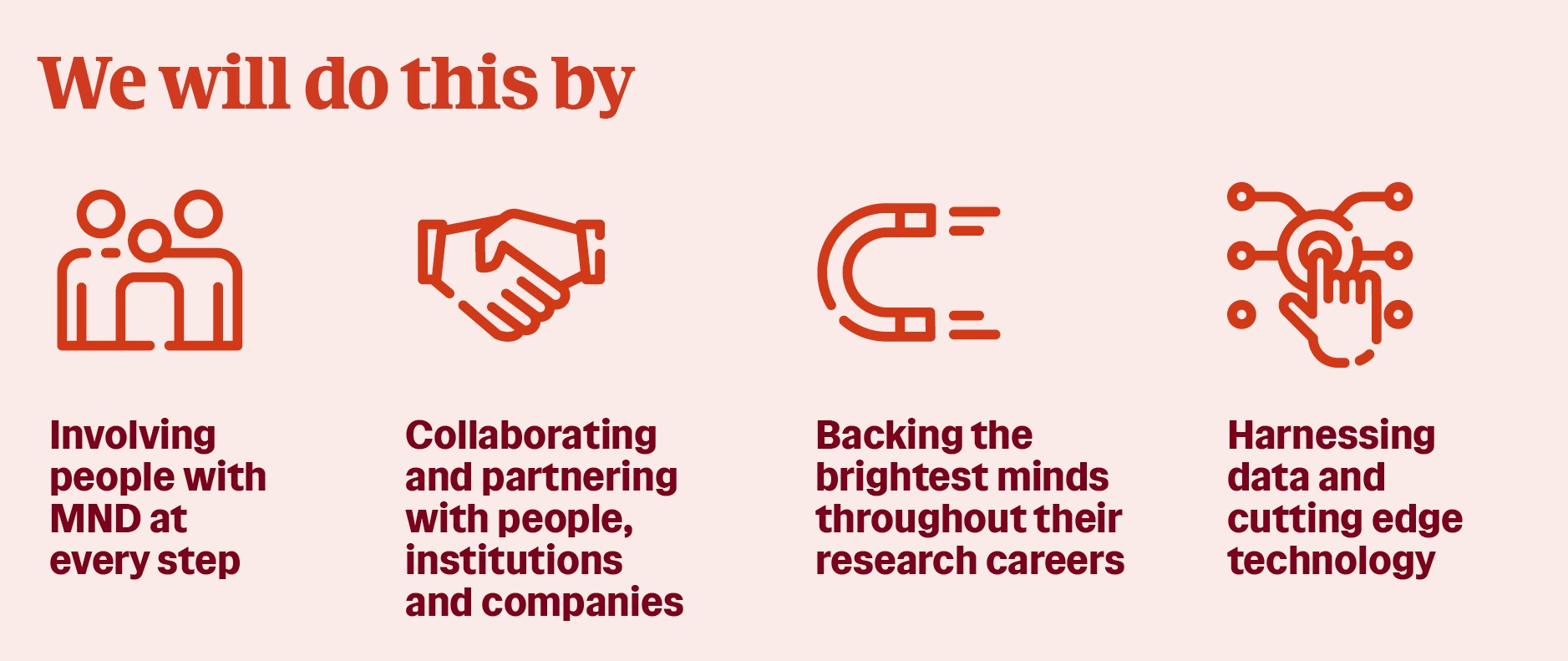
We’ll widen our gaze, investing in collaborations between research teams which bring different skills and perspectives to solve the challenges of MND.
We’ll challenge researchers
We’ll challenge researchers to answer the questions people with MND are asking and fund those who propose imaginative approaches.
We’ll develop new approaches
We’ll develop new approaches to encourage the brightest researchers to dedicate their careers to MND research.
We’ll back pioneering ideas
We’ll back pioneering ideas, with small awards to take forward high-risk approaches to research and treatment.
We’ll reward innovation
We’ll reward innovation, investing in companies developing new ways of supporting people with MND.
Measuring our impact
Our investment in research relies on the generosity of our supporters. Over the next five years we’ll share with you how that investment is changing lives.
We’ll share the difference we’re making today to the quality of life of people with MND, and share the milestones on the road to transforming tomorrow’s treatment for everyone.