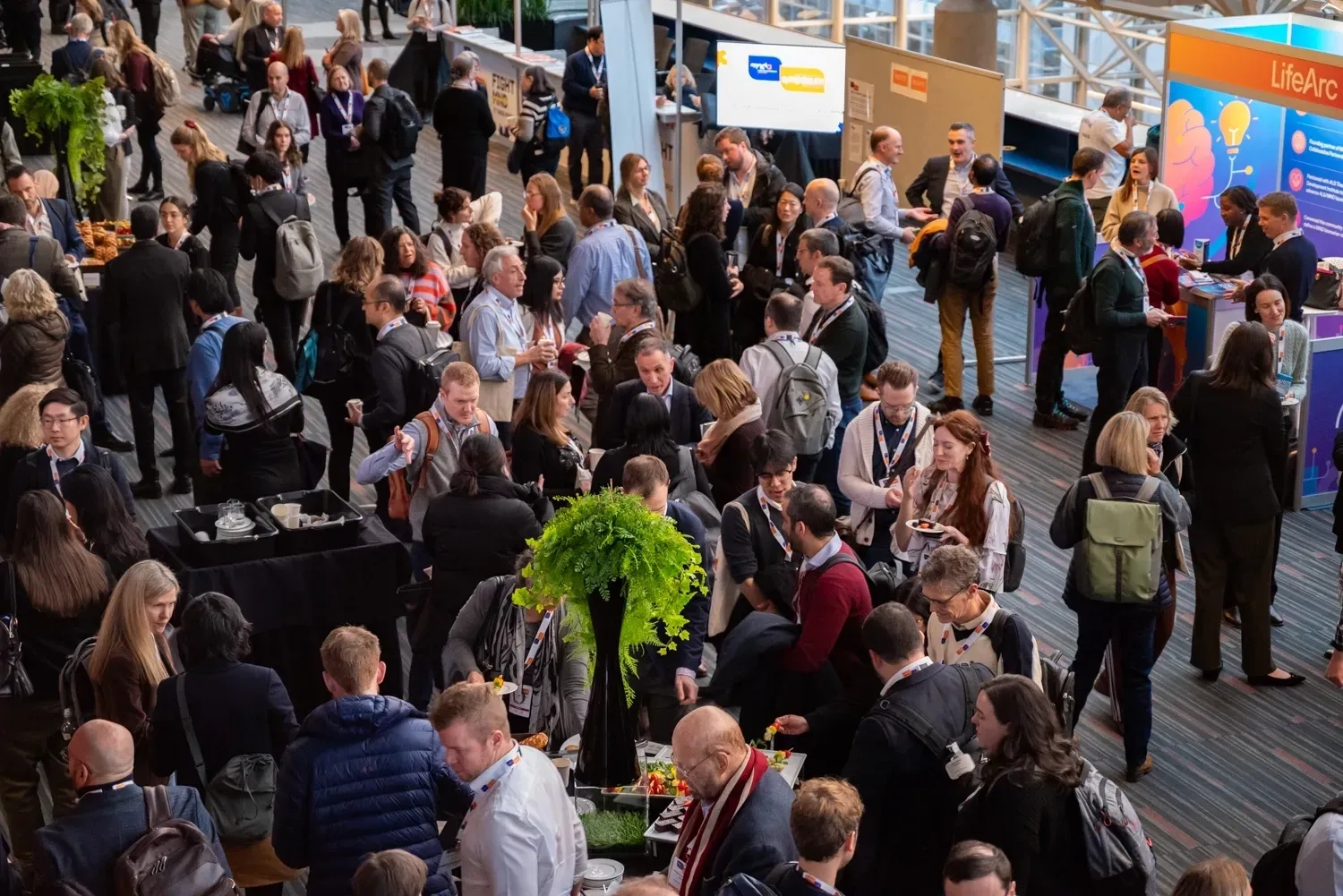
Welcome to the latest news and updates from the MND Association's 36th International Symposium on ALS/MND in San Diego
Symposium live feed
05/12/2025 08:00 pm
Insights into MND in Latin America
We’ve just come from the the genes and phenotypes session where Dr José Manuel Matamala and Dr Marcondes Cavalcante Franca Jr shared insights from their work comparing MND populations in Latin America with those in Europe and North America.
Their key findings include a lower incidence of MND in Latin America, but an earlier age of onset for those who do get it. They also noted that there are fewer people in Latin America with changes in the most common genes associated with MND, such as C9orf72, and more with rarer gene changes linked to the disease.
Day one kicks off here in San Diego with award win and Stephen Hawking lecture
Congratulations to MND Association researcher Valeria Gerbino, who’s just picked up the IPG Award, presented by the Paulo Gontijo Institute to recognise and encourage MND research by a young investigator.
Dr Gerbino’s work looks at the role of TBK1-dependant immune signalling pathways in MND. TBK1 is a protein that helps control the body’s immune response and clears away damaged cell parts. When TBK1 doesn’t work properly, as seen in some forms of MND, waste builds up in nerve cells and the immune system becomes overactive, which can damage and kill motor neurones.
The Stephen Hawking lecture was as exciting as we’d hoped...
In the ‘Mini Brains and Space: Unlocking the Secrets of Brain Development and Aging’ talk, Professor Muotri from the USA urged the community to consider applying ‘out of the box’ thinking.
He described how he’s using a technique and technology which exposes ‘mini-brains’ (small, 3D laboratory-grown clusters of cells that mimic aspects of the early human brain) to microgravity and radiation in space. The aim is to understand how the harsh space environment accelerates the aging of neural cells and contributes to neurodegenerative diseases like MND.
Applied to MND research, strategies like this could help uncover more about what happens in the brain before and during the disease – which in turn might uncover new targets for potential treatments.
The Stephen Hawking lecture is just wrapping up - more on that shortly. In the meantime, a reminder of why the Symposium is so important.
Every year we bring researchers from around the world together (in a different place each time) to collaborate, share progress and meet others working in the same field. The more scientists can work together, the quicker our progress on understanding and treating this disease will be.
In fact, feedback from last year’s Symposium in Montreal indicated 90% of delegates made new connections and planned to pursue these. This event is vital in providing such collaborative and introduction opportunities.
The International Alliance on ALS / MND runs a Patient Fellows programme each year, supporting people affected MND to come. We're welcoming are 22 patient fellows this year.
Three sessions run simultaneously throughout this unique meeting with one being streamed to our virtual delegates. There’s a chance for delegates to ask questions at the end of sessions and loads of opportunities to engage with speakers throughout the three days.
The Symposium is in fact the largest medical and scientific conference specific to MND. And a virtual streaming element of our Symposium means you don’t have to be here in person to be here!
Our first ever Symposium was held in Birmingham in 1990 with 50 delegates. Here today are:
Over 1,000 delegates from over 40 countries
24 themed sessions
Approximately 250 speakers
300 science posters being shown and discussed in three sessions across the three days.
That's a lot of people to share passion, determination and knowledge.
Welcome to the MND Association’s 36th International Symposium on ALS/MND
Welcome live to our 36th International Symposium on MND/ALS, the world’s largest gathering of MND researchers. It’s a privilege to be here among so many people all connected by one purpose: to bring hope to everyone affected by MND.
We’re set to welcome over 1,000 people from over 40 countries — scientists, researchers and innovators from across the globe, all here to share discoveries happening right now.
There’s a real sense of community already. Over the next three days, we’ll take you inside some of the most promising research, meet the people behind the breakthroughs and hear powerful personal stories.
Along with Professor Ammar Al-Chalabi, chair of the Programme Committee, our Chief Scientist Dr Brian Dickie is about to kick-off proceedings.
We will share resources to the email address you provide. The email will include your name in the subject line and the following message: 'I have found these information resources that you may find helpful too.'
Email sent successfully
We have shared these resources with the email address you entered.