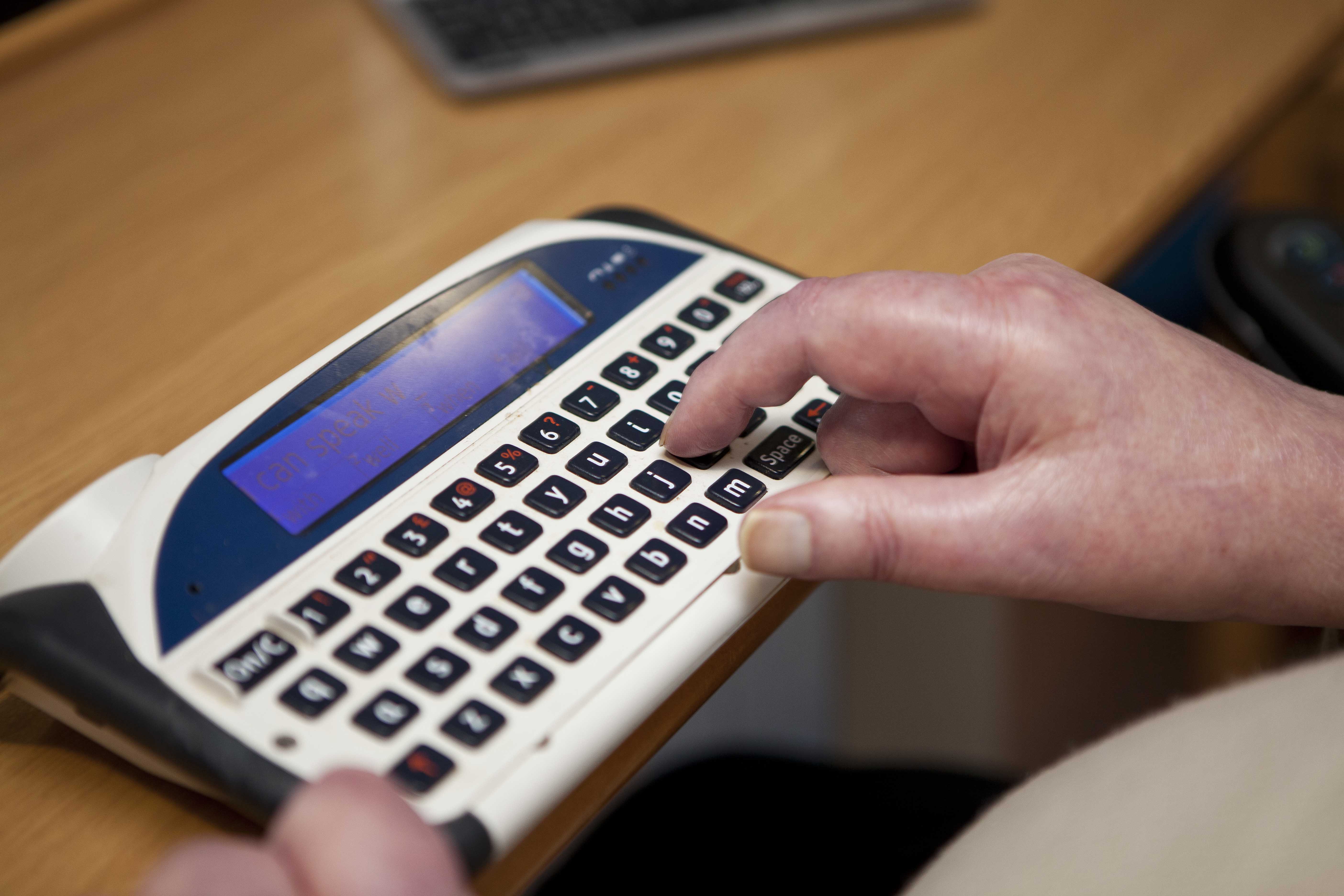
Augmentative and alternative communication (AAC) includes a range of methods used to support or replace speech.
In MND, AAC can help people communicate as speech becomes affected. Introducing support early can help maintain communication, independence and involvement in decision making.
On this page you will find:
- what AAC is and how it is used
- when to consider AAC
- types of AAC and how they may be used
- what to consider in practice
- further guidance and resources.
Understanding AAC in MND
AAC refers to any method of communication that supports or replaces spoken language.
This can include:
- gestures, facial expression and body language
- writing or drawing
- communication boards or books
- electronic devices that generate speech.
AAC can be used alongside speech or as an alternative where speech becomes difficult.
Needs and preferences vary, and communication methods may change over time.
When to consider AAC
AAC should be considered early, even if speech is still relatively clear.
Early introduction can:
- support continued communication as needs change
- allow time to explore and become familiar with different options
- reduce pressure if speech declines more quickly.
Do not wait until speech is significantly affected before introducing AAC.
Voice and message banking
Voice and message banking allow a person to record their own voice or create personalised messages for use with speech generating devices. This can help maintain a sense of identity and familiarity in communication if speech becomes more difficult.
Voice banking creates a synthetic version of the person’s voice, while message banking involves recording meaningful words, phrases or expressions in their natural voice.
These approaches are most effective when introduced early, while speech is still relatively clear.
- Discuss voice and message banking early, even if speech changes are mild.
- Explain that these options are optional and may not be right for everyone.
- Consider energy levels and fatigue, as recording can be tiring.
- Refer to speech and language therapy for advice and support.
Not everyone will choose to use voice or message banking. Some people may prefer other options, such as standard synthetic voices.
See our voice banking information sheet for more detailed information.
Types of AAC
AAC can range from simple to more complex options.
Low tech AAC may include:
- pen and paper
- communication boards or books
- alphabet charts.
High tech AAC may include:
- speech generating devices
- tablet based communication apps
- eye gaze or switch access systems.
The most appropriate option will depend on the person’s needs, abilities and preferences.
Access and assessment
Assessment and support should be provided by a speech and language therapist (SLT), often working with a specialist AAC service.
- refer early to SLT for assessment
- consider changes in physical function that may affect access (for example, hand function or fatigue)
- involve the person in choosing options where possible
- review needs regularly as MND progresses.
Specialist AAC services may be able to support with more complex assessments and equipment provision.
See our AAC pathway for more detailed information.
What to consider in practice
AAC is most effective when introduced as part of a wider communication approach.
- Allow time for communication and avoid rushing.
- Check understanding and confirm meaning.
- Ensure communication tools are accessible and available when needed.
- Support family members and carers to use AAC effectively.
Communication needs may change over time, and approaches should be adapted accordingly.
Further guidance and resources
You may find the following resources helpful:
Communication, speech and language support guide
You can find more guidance on communication, including dysarthria and dysphagia, in the Management of MND section.