20 January 2026 News
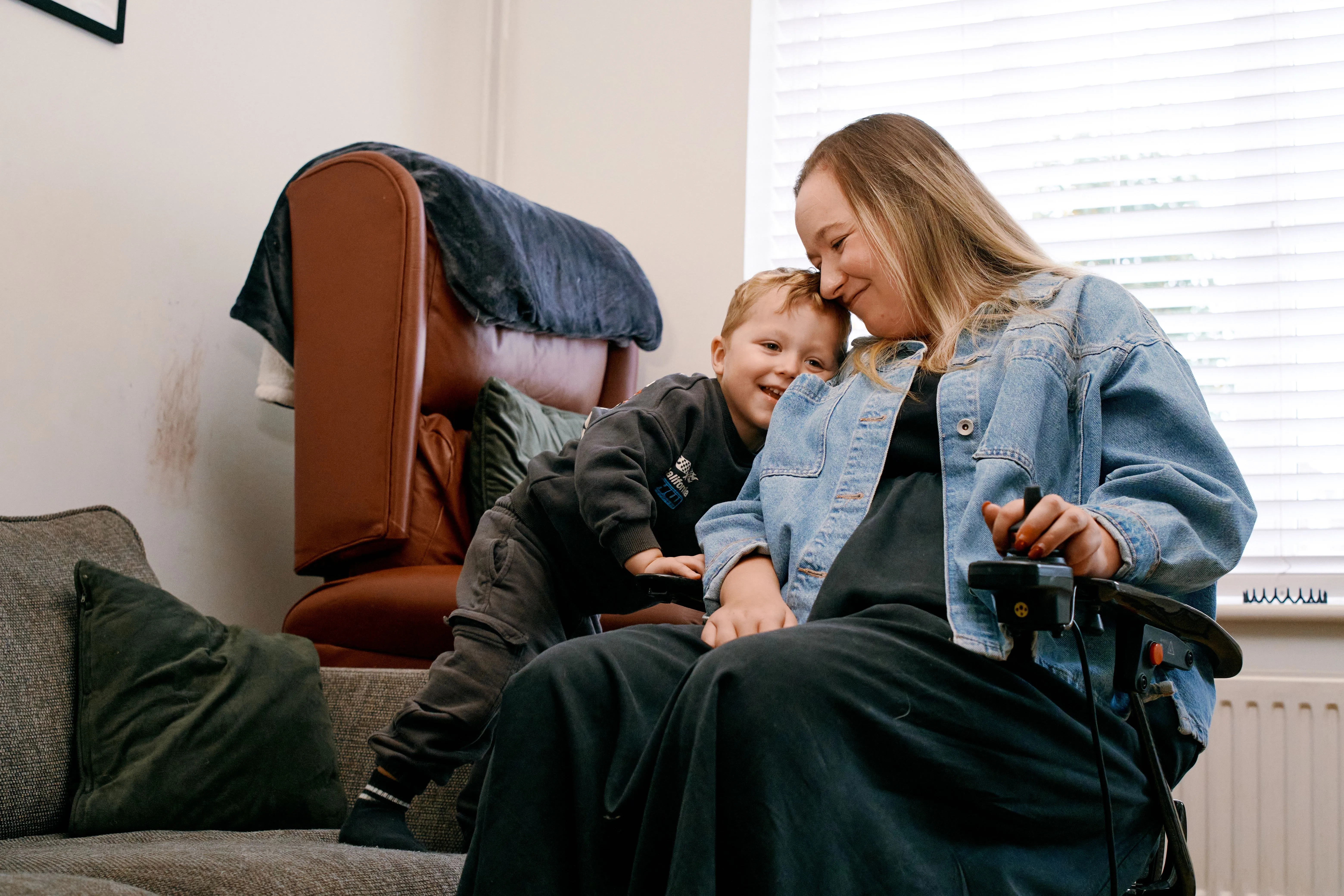
A council in Yorkshire has unanimously backed a motion to fast-track financial support for people living with motor neurone disease (MND) thanks to our Unlock the Door campaign.
East Riding Council announced it will ensure people with terminal, progressive conditions can access Disabled Facilities Grants (DFGs) more quickly.
DFGs help people living with a disability to adapt their homes to be safe, suitable and accessible.
However, too often people needing support face major delays.
Our research found that the average wait time for delivery of a major home adaptation was 375 days for people in England. With a third of people dying of MND within a year of diagnosis, this is too slow.
The motion passed by East Riding Council, in line with our recommendations, commits to a new target of delivering home adaptations for people with progressive terminal conditions within 55 days for simple adaptations, and 130 days for more complex works.
For very small adaptations, such as grab rails, the council will now deliver them in a matter of days.
East Riding Council becomes the second local authority to adopt the motion, following Forest of Dean District Council in December 2025.
Alex Massey, Head of Campaigning, Policy and Public Affairs at the Motor Neurone Disease Association, said: "We want to thank both councils for leading the way on this vital issue.
“We will continue to campaign for every local authority to follow suit and ensure that people living with MND receive the support they need, whichever part of the country they live in.”
You can support our campaign by asking your local authority to implement a fast-track process today.
Take our quick campaign action to write to your council and help us make sure everyone living with MND has a safe and accessible home.
Charlotte Cooke, 30, a young mother from Thatcham, Berkshire, was diagnosed with MND six months after giving birth.
To live safely and with dignity, she needs a single storey extension with a wet room and adjoining bedroom.
Her father, Bob Parker, 58, said: “They’re not luxury items, it’s things Charlotte needs to make her life easier.
“Planning applications for someone with a terminal condition shouldn’t be treated the same as a family simply extending their kitchen.
“Charlotte’s application has just gone into the same queue as everyone else’s. With MND, time is of the essence, and we need the DFG process to be a lot faster than it is.”