June 2026 Special Days
Meet Linda...
Linda, diagnosed with MND after 10 years of symptoms, shares her life before the diagnosis, highlighting her extensive career and achievements. Despite her diagnosis, Linda continues to fundraise and engage in activities like pottery which she finds therapeutic. Linda emphasises the importance of support systems, particularly the Association’s financial support grants.
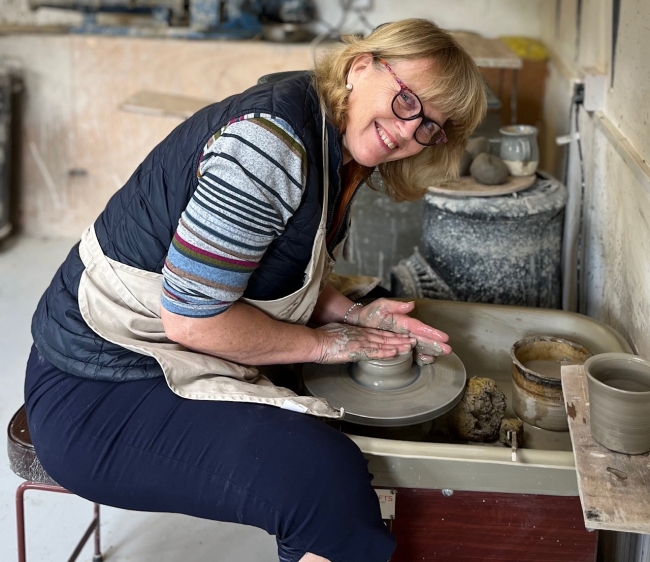
Linda shared her story with us in April 2026.
My special day
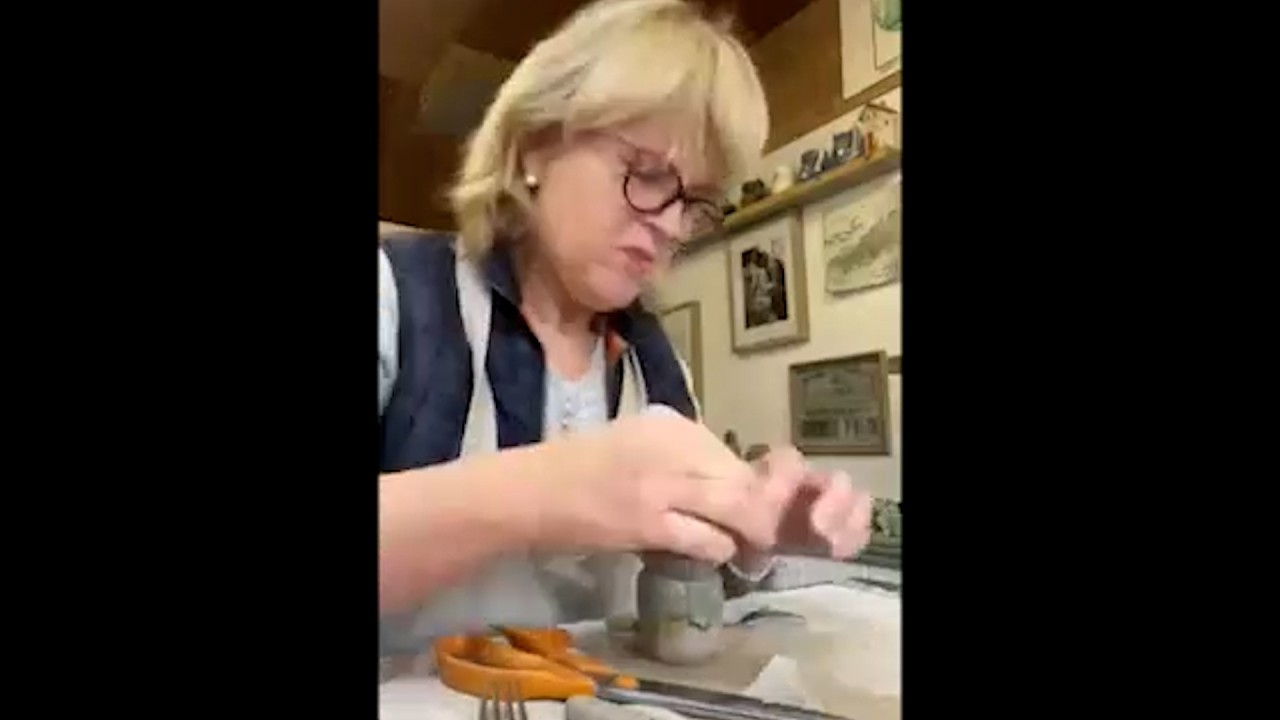
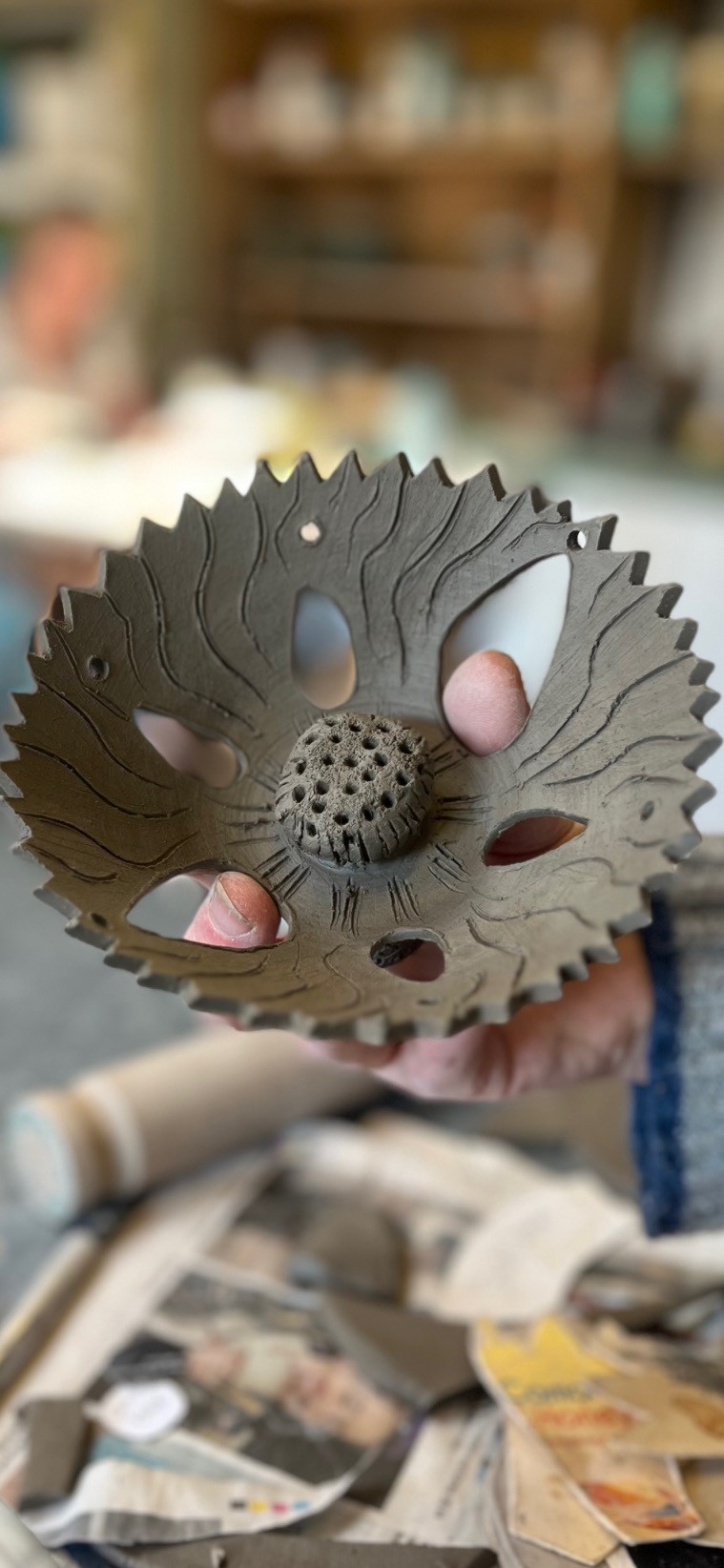
Mentally and physically, I have to keep going. I’ve never been someone who could sit still. My son encouraged me to try pottery, something I’d never done before. He bought me a series of 12 weeks with potter Sarah Brain, owner of Stonehenge Pottery. At first, I didn’t really know what to expect. After the first 12 weeks the MND Association have funded it through their support funds. That was two years ago and I still go every week! It’s been transformative. It helps me mentally and physically – especially my hands and fingers.
Pottery itself has become a journey. There is something about the feel and smell of the raw clay. When you work with clay, you’re holding something living. I’d never thought about it like that before, but it responds to you. You can shape it, change it, ruin it, or create something meaningful. I’m not
particularly good at it, but I can sit there for three hours and focus. I can turn nothing into something, with guidance. It’s soothing. It helps my hands. But more than that, it helps my mind.
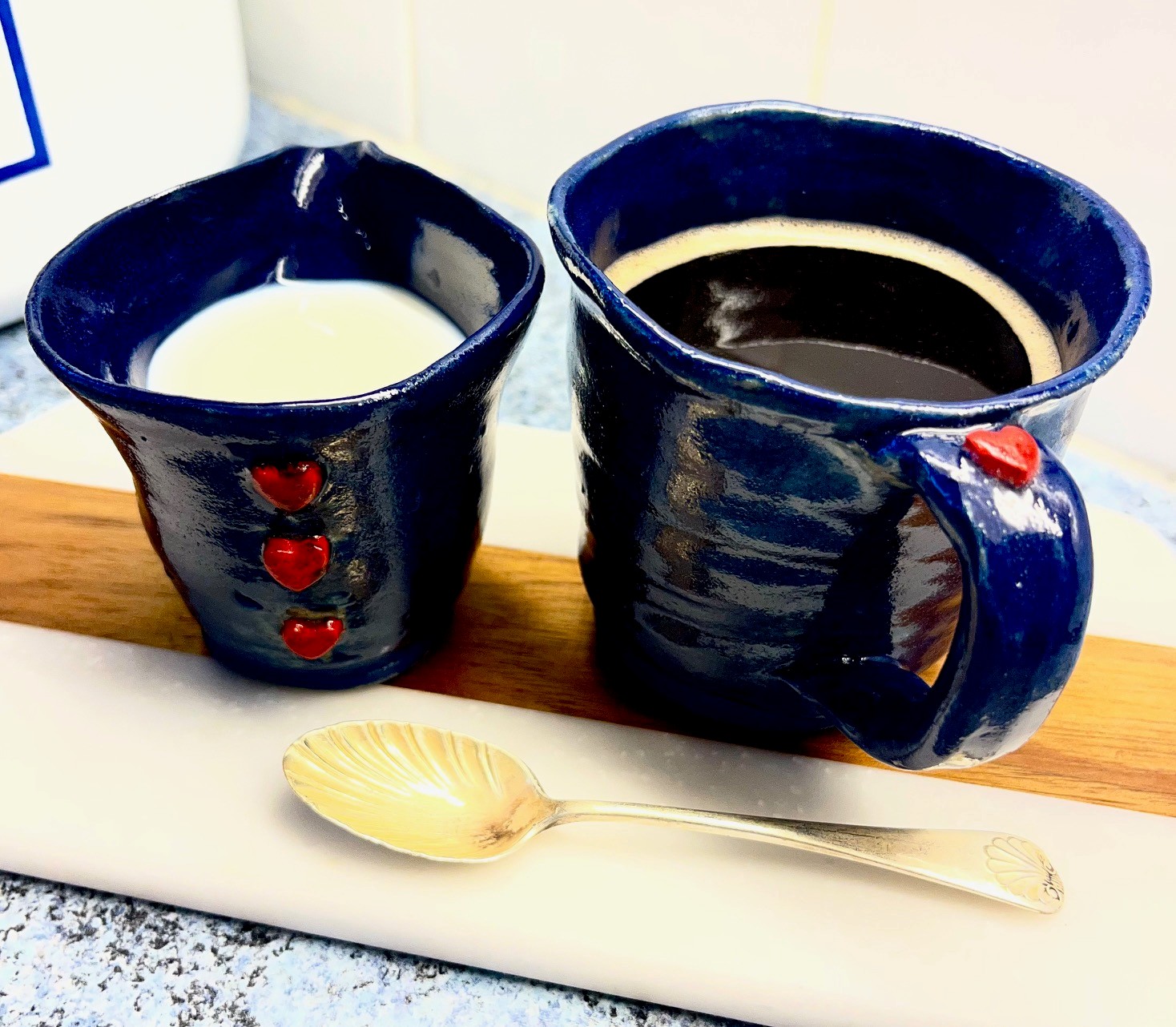
Handling the clay on a wheel without total concentration, most of my work ends up being catapulted across the room – just like me when I am walking. So I have learned to appreciate the similarities of the medium to my body. I can lose myself for a morning and leave calm and refreshed. Educating the other potters about MND in an organic way has enabled me to recognise and appreciate myself. As with all new experiences, I found the learning frustrating and challenging, however, with practice and their support I have learned to hone my skills to enable me to enjoy the fruits of my labour.
Life before MND
I’m Linda, I’m 63 and live with my husband Jim. I have two sons and a beautiful grandson. I’ve always worked. I started working at 16, and until recently I’ve given my working life 110%. I’ve always been a leader. My analogy has always been that if there was a tsunami coming, I’d be the one holding back the water. That’s always been me.
I’ve always been lively, driven, and pushing forward. I started my career in banking. Within a year I was promoted but I realised early on that staying in the bank would trap me, so I left and moved into recruitment and retention and realised we were losing scientists because there was no childcare. In the 1980s there were no workplace nurseries, no childminders. I researched childcare in Europe and built a business case. I secured £120,000 in government funding, influenced changes to staff child ratios and set up a workplace nursery. It was meant to be temporary but it lasted 30 years. Ironically, I didn’t have children when I set it up. Later I had two sons, now 35 and 30.
I then became the right hand person at a sculpture park, despite knowing nothing about art I learned fast, set up education programmes, worked with artists and acted as the fixer. I stayed nine years and was the longest serving person there.
I’ve always stepped into what needed fixing, learned quickly, carried responsibility and kept going. Work was never just a job to me. It was duty, purpose and identity and I gave it everything I had.
Early symptoms and diagnosis
After 10 years of unknown symptoms, in 2023 my husband and I attended a meeting with my consultant to obtain to the results of a final lumbar puncture procedure. When they told me I had PLS you could have knocked me down with a feather. It was awful. There’s no other word for it. Everything changed in that moment. I had always worked, always pushed, always kept moving, and suddenly my body wasn’t doing what my mind wanted it to do anymore.
So we drove home in stunned silence and I went back to work. Over the next 18 months I struggled to accept the diagnosis and battled hard against the symptoms. Deteriorating speech, emotional lability, spasticity of the lower limbs all made sense now. I had Primary Lateral Sclerosis. My journey had now begun as to how to live with myself with MND and to come to terms with the uncertainty of the future.
Having a label, I felt different and my emotional lability spilled over constantly as I missed ‘the old Linda’. Visually, this was hard for people around me to understand, and the uncontrollable crying (emotional lability), prevented me from being able to explain myself in the moment.
The impact of MND
The first thing that happened was the crying. The pottery group didn’t really know what to do with that. Crying just came out of me, without warning. And from that experience, I realised something was missing. There were communication cards for speech difficulties, but there was nothing for emotional lability, nothing to explain the crying. So I created a card.
The card says, “My condition can cause sudden or intense crying or laugh. This may not match how I feel, but usually stops by itself. Thank you for being patient.” It explains that the crying is part of my condition, not my emotions. That card is now part of the MND resources, which I still find incredible. I’ve used it on the train, at hospital appointments, in public places. It’s made such a difference.
I’m a people person, but I also find it hard to talk when my energy is gone. At some point in the day, that’s it, I’ve used my words. People don’t always see disability when it isn’t obvious. If you’ve got a broken leg or cancer, there are visible signs. With PLS or MND, people don’t always know what they’re seeing, and silence makes people uncomfortable. I wish people understood the power of silence. If you just allow it, don’t rush to fill it, you’ll get the next bit. That’s the bit that matters. It’s hard as the person with the condition, because you want to make it easier for others, but sometimes waiting is the best thing you can do.
I miss the old Linda. I really do. But I’m getting there. I go to pottery regularly, to the park when I can, I do exercise classes and I go in the pool. The MND Association help fund one-to-one sessions and they are incredibly helpful.
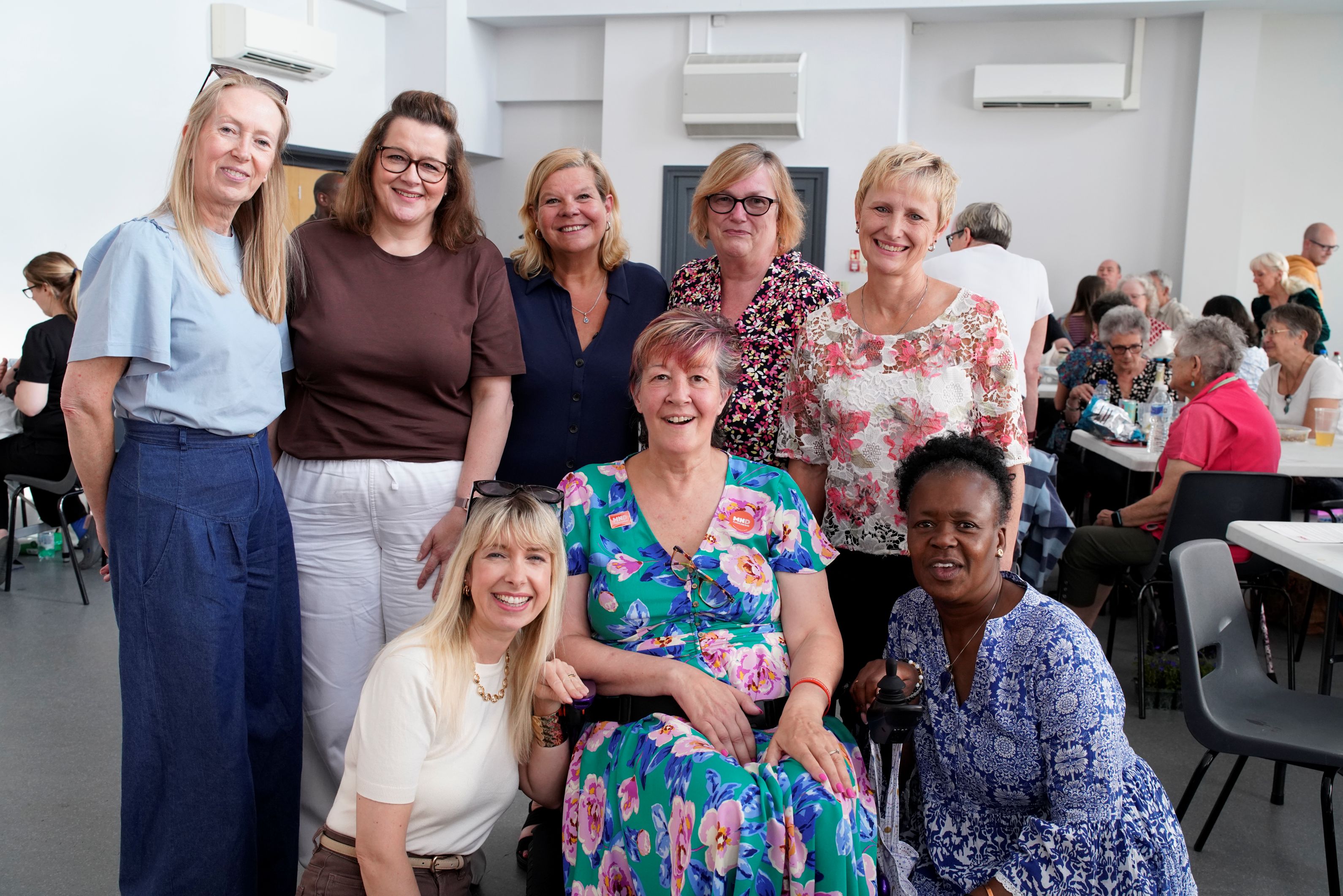
The MND Association has been amazing for me. People genuinely do not realise how joined up the organisation is. It’s like having a safety net around you. They’re not intrusive, they don’t push, but if I need something they are there. It feels like having a second family. Your own family care, of course they do, but they don’t fully understand.
I am cosseted with professional advice, practical support and a direct line to almost anyone I may need to support me on my journey.
Fundraising for MND
I also fundraise. I didn’t plan to, it just happened. At one point I thought, I need something to focus on. I need a reason to keep moving. I started raising money, and the response has been overwhelming. It keeps me focused because I have to keep going.
As my life has changed, my circle of friends has changed too. My friends now are my fundraisers. They rally around, they organise quizzes at the local pub without me asking, they share the JustGiving page. They are my peope.
My job now, as someone living with this condition, is to stay focused and positive. Not because it’s easy, but because it empowers the people around me. Positivity is infectious. It makes people want to support you. Fundraising and support only work when you let other people in and allow them to help.
I can't do this alone. And that’s something I’ve had to learn.
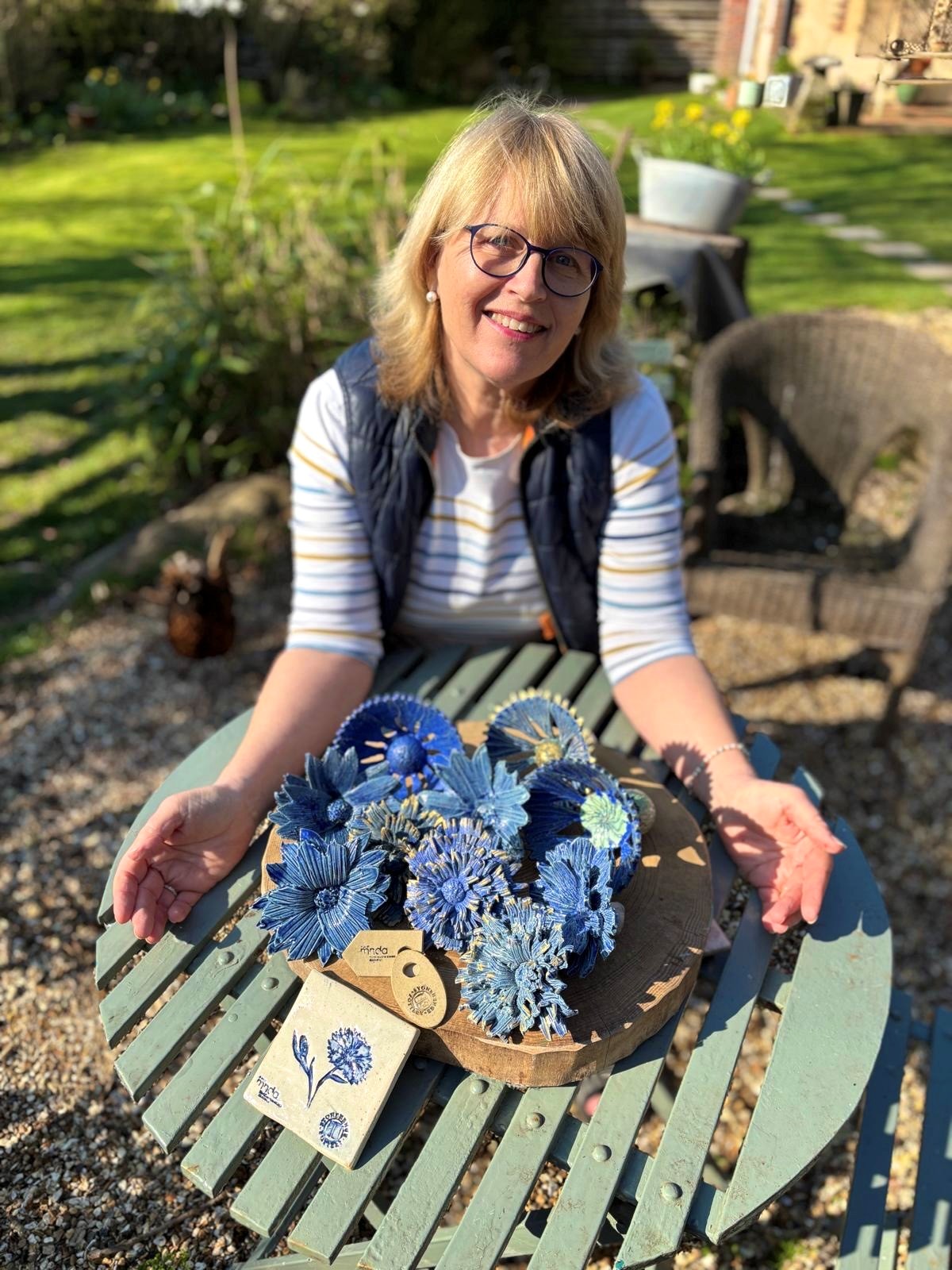
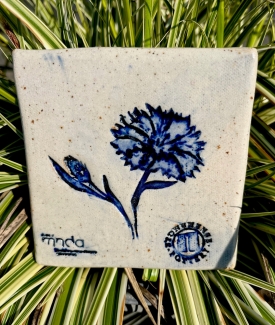
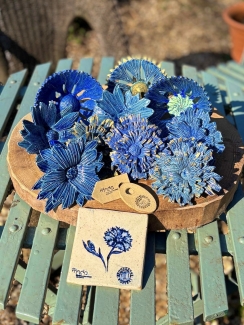
In May, we will have made 100 ceramic Cornflowers, the MND signature flowers, selling them to help raise much needed funds for the MND Association.
Advice to others
For anyone with MND or PLS, you have to push mentally. That’s the hardest part to explain to people. When I wake up in the morning, I have to fight. I have to fight to get up. I could easily stay in bed and disappear from the day, but I don’t. I fight to stand up. I fight to keep going. Your life becomes what you make it. It sounds like a cliché, but it’s true.
I wouldn’t wish this on anyone. But I am living through it. And I want to thank every person involved, because the support makes it possible to keep going.
Planning has saved me. I plan everything. If it’s in the diary, my husband Jim knows what I’m doing, where I’m going, and how he can support me—without me having to explain it again and again. It allows him to help practically: charging my phone, getting me there, working around my day.
I am still Linda … fighting and striving to make every day matter because I too, like so many, live with MND. Having a positive approach to everything really helps me!
For anyone learning to live with this condition, allow me to say, you are still, and always will be, YOU! Through different activities supported by the Wellbeing Support grant, you can strive to make every day matter and enable your people around you, to help empower you to live the best life you can.