18 May 2026 Blog
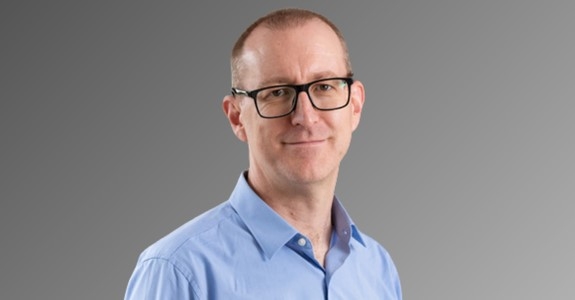
Mike Rogers, MND Association's Director of Research and Innovation
We recently launched our unapologetically ambitious five year research strategy which was intentionally and rightly shaped by people with MND. I won’t ever forget the conversations I had with our community during that process which showed – despite everything – hope for a future without MND.
We know the only way we’ll defeat MND is by having the very best minds dedicate their time, experience and expertise to MND research. This means finding and enthusing potential leaders in the field early on.
But we need to capture their interest before they focus their efforts on other conditions. And we need to support them throughout their research careers, and not just with funding but with additional training and advice on attracting additional and future funding so they can continue with research that shows real promise.
Our breadth of support for early career researchers (ECRs), built over many years, is helping to do just that.
Using data to solve the puzzle
There is currently not enough use of data science as a tool for helping us learn more about MND. We can use data to find out more about the disease, to look for patterns and to point us towards potentially effective treatment targets.
We already have a track record of attracting and funding promising young researchers and we’re keen to encourage data scientists too to help us understand more about the disease. We’ve just launched our first ever the MND Association Doctoral Training Award which this year will fund ECRs focused on data science – which is on top of the student, junior and senior non-clinical and healthcare grants we already offer.
Our annual event combining researchers and people affected by MND
Our support for ECRs has to be more than just financial. Each year we run MND EnCouRage UK, an informal event designed specifically to support ECRs. The event gives them career skills, the chance to learn how to explain their science to an audience, opportunities to collaborate with peers and, crucially, time to speak with people affected by MND and their families who can share that vital lived experience and hopes for research. We know from previous experience this has further ignited the passion and drive of our ECRs.
Interested in joining us for this year’s event?.
You’ll find out about the latest MND research (presented in non-scientific terms), join in round-table discussions about clinical trial results and new papers, and listen to talks from MND researcher scientists and leaders.
Register and find out more about this year's EnCouRage, which takes place on 14-15 July in Loughborough.
But we don’t stop there…
We’re proud of our record in nurturing these talented researchers but we can and must do more to drive the progress in MND research we’re all determined to see.
As well as offering more and new funding for ECRs, and running tailor made events, we’ve also started encouraging a younger generation towards research via our outreach work at New Scientist Live. The event is aimed at young people between 14 and 18, to showcase the latest breakthroughs, innovations and discoveries in science and technology. The Association took part to encourage young people to consider science and research careers while also raising awareness of MND and MND research.
We’re about to open applications for this year’s Association-funded Rob Burrow ECR Prize with the winner, who’ll get £10,000 funding and entry to our International Symposium on ALS/MND, announced later in the year. Dr Oscar Wilkins, winner of last year’s prize, is working to find new treatments which not only extend life but also improve quality of life for people with neurodegenerative diseases. He said: “MND treatments being developed today are underpinned by genetic-level knowledge of the disease – that’s really exciting. We’ve seen from other motor neurone degenerative conditions that when we build therapies based on this kind of deeper understanding, they can be incredibly effective.”
We also support the UK MND Research Institute, a collaborative a national network of MND centres working together to carry out world-leading MND research to accelerate the search for a cure. This work includes specific support for ECRs such as the pre-fellowship programme and buddy scheme. Part of the work of the Institute is EXPERTS-ALS, a pre-trial drug platform that can rapidly test drugs to assess their potential to slow MND progression and now has 164 people signed up across 11 UK MND centres. Within that programme we’re providing yet more support for ECRs including an additional £50,000 funding.
As the leading charity funder of MND research, we’re committed to developing new approaches to encourage the brightest researchers to dedicate their careers to MND research.