April 2026 Legacy Stories
Meet Jessica-Louise...
When Jessica-Louise's Nan returned from a holiday with her husband of 50 years, she came down with a symptoms similar to Covid, and when they persisted, she was diagnosed with long Covid. The family challenged this diagnosis multiple times and eventually they were told it was MND. Two years on, Jessica-Louise reflects on the impact of MND and the need for more joined-up support for people with and affected by MND.
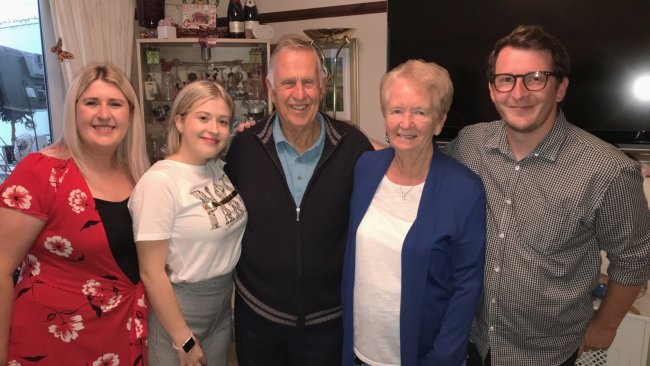
Jessica-Louise shared her story with us in October 2025.
My Nan and MND
I’m Jessica-Louise and I lost my Nan to motor neurone disease a little over two years ago. Everything started in such a strange, chaotic way back in 2021. It was around the time people were finally allowed to travel again after COVID. My Nan and Grandad went on holiday and when they came back Nan was almost immediately unwell. At first, it seemed simple and we thought she had Covid. She was poorly for a few weeks, then slowly started to improve.

Then things started to spiral. She had all the classic signs of long Covid like breathing issues, a raspy voice and a chesty cough. Her voice box just seemed to deteriorate and she could barely speak. She kept going back and forth to the doctors and the hospital and each time they told her, ‘It’s just long Covid, don’t worry, you’ll be fine.’
My grandparents were in their late 80’s and early 90’s and they tended to accept whatever the doctors said. But my mum and dad weren’t convinced. Mum kept saying something felt wrong, like there was something more serious going on. We got Nan’s voice box checked and they said everything looked normal. They ran tests, more tests and still insisted it was nothing serious.
This went on for months and by early 2023, everything changed almost overnight. Nan had always been small, maybe around ten stone, but she suddenly dropped to eight stone within months. We started suspecting something neurological but MND wasn’t on our radar at all. We had no history of it in the family. Cancer was familiar to us, MND was not. My Nan was a two‑time breast cancer survivor herself and lost her daughter, my aunt, to breast cancer in 2005.
By late summer, around August or September, Nan had lost so much weight she was unrecognisable. She went from looking like herself to being almost skin and bone. The hospital ran what tests they could and eventually let us know they would write to us with results and more information. The whole time they assured us it wasn’t serious.
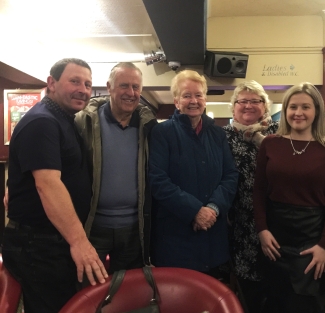
Six weeks before she died, we received a letter saying she had motor neurone disease and that it was aggressive. The worst part was that nobody from the hospital sat down with us, explained the diagnosis, or told us she was dying. No preparation. No chance to gather as a family. Nothing. If we had known the MND Association existed we would have gone to them for support, financial, emotional and practical.
My Grandad, despite being in his 90’s, had been caring for her full‑time. He washed her, changed her, fed her. If we had been referred to somewhere like the MND Association, we would have been able to get the right support in place for both my nan and my grandad. As her MND progressed she couldn’t eat solid food and was on a liquid diet. Seeing her like that was horrific. I think about it every single day.
Nan had always been such a strong, dominant, hardworking woman. She was full of life and had travelled the world on cruises. She reminded me so much of Mrs Bucket from the TV show, Keeping Up Appearances. That was my Nan through and through.
Around the time of receiving the diagnosis letter, she was taken into hospital again because her oxygen levels were low. She’d be admitted for a week or two at a time. The day she died, I happened to be home visiting my family. The nurse came to check her in the morning at home and found her oxygen levels were dangerously low, so Nan was rushed to hospital urgently in an ambulance.
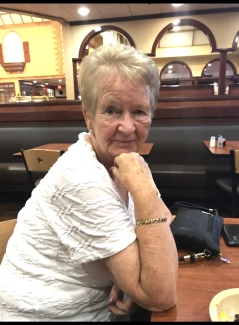
She waved as they took her away in the ambulance telling us she loved us and would see us later. I live in Manchester and my parents are on the Wirral, so I’d been back and forth to the hospital so many times and that night, I decided to return to Manchester. My mum, dad and Grandad all stayed overnight at the hospital with her. We knew she wasn’t well, but nobody had told us she was at the end of life.
The next morning, I got a call from my sister. The hospital had rung to tell us Nan had been moved to ICU and things were not looking good. My sister told me to come home immediately. I have never moved so fast. I cried the entire train journey because I didn’t know what I was about to face.
When I arrived, Nan was essentially comatose. She had glazed eyes, was struggling to breathe and was hooked up to oxygen. She wasn’t the woman I knew. But when she heard me and my sister, she perked up just slightly. She knew we were there.
The doctors pulled us aside into a hallway full of families, nurses and doctors rushing past and told us to say our goodbyes. We would have appreciated some privacy when being told such devastating news.
My sister and I went home overnight, and amazingly she held on until the next day. We think she was waiting for us all to be together again. By then she had been moved to end‑of‑life care. A specialist doctor came to speak with us and she was incredible. She let us ask anything. She made us feel seen in our grief.
Grandad never left her side. They’d been married 50 years.
We were sat around her bed and my mum checked her pulse but she couldn’t find it. We sat with her in silence, processing. Then we told the doctors, who confirmed it and told us to stay as long as we wanted.
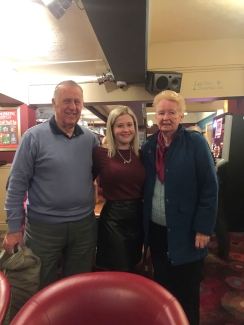
Her official cause of death was Aspiration Pneumonia from MND.
We donated to the MND Association and raised money in her honour. If we’d known earlier, we would have done more. I would have taken more photos and videos and savoured the little moments.
I had done so much research about MND on my own because we had no guidance from medical professionals. It felt like we were left to get on with it. That’s why I respect the MND Association so deeply, they help get the word out about a disease most people only know from things like the ice‑bucket challenge or Rob Burrow. That's why the work the MND Association does is so important because it helps raise awareness and educate people.
Even two years later at 30, I’m still coping with it. I started therapy because watching someone die like that leaves a mark.
This disease changed our family forever.