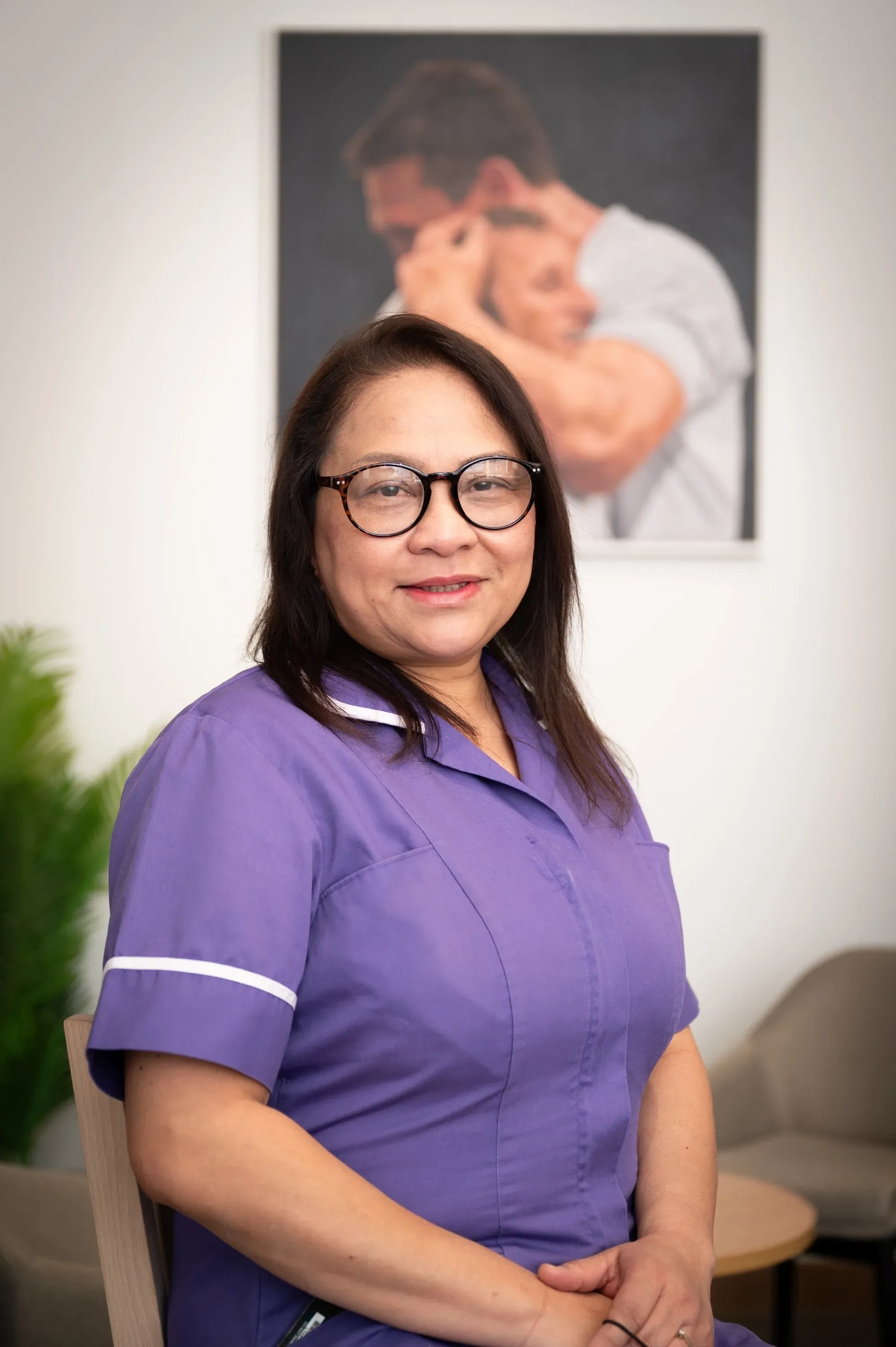
Our Research Nurse Network is going from strength to strength - Emelda Veraque is the Research Nurse who has joined the team at the Leeds Teaching Hospitals NHS Trust.
You can find out more about Emelda in a special question and answer spotlight here:
How would you describe your role to someone you’ve just met?
I work as a Motor Neurone Disease Research Nurse at the Rob Burrow Centre for MND, supported by the Motor Neurone Disease Association. My role is a blend of clinical care and research. I support patients and families through their journey with MND while also helping to advance research that could lead to better care treatments and one day, a cure. It’s a privilege to be part of something that brings both compassion and innovation together.
What does your typical working day look like?
No two days are ever quite the same, but they all revolve around people. I might be coordinating clinical trials, supporting patients through assessments, liaising with research teams, or simply being there to listen and reassure. There’s a lot of paperwork and protocol, but at the heart of it is the human connection and making sure patients feel seen, heard, and supported every step of the way.
What made you want to become a nurse?
Since I was a child, I always dream to become a nurse. I wanted to make a difference in people’s lives but was not understanding the real nurse involves not just medically, but emotionally. Nursing allows you to be present in someone’s most vulnerable moments and offer strength, comfort, and dignity. Working in MND has deepened that calling for me; it’s about walking alongside people with courage and compassion, and being part of a community that never stops fighting for better outcomes.
What attracted you to your current role?
I’ve always wanted my work to have a real impact on people’s lives. When I learned about the opportunity to join the Rob Burrow Centre for MND, it felt like more than just a job! But it felt like a calling. Motor Neurone Disease is such a challenging condition, and being part of a team that’s pushing boundaries in research and care gives me a sense of purpose every single day.
Who has had the biggest impact on your career?
There isn’t just one person, it is the patients and families I’ve met along the way. Their resilience and courage have shaped the way I see nursing and research. They remind me why this work matters and inspire me to keep striving for better treatments and better care.
What do you enjoy most about your role?
I love that my role bridges two worlds - the human connection of nursing and the innovation of research. Sitting with a patient and listening to their story, then knowing that the data we collect could lead to breakthroughs. It is incredibly rewarding. It feels like hope in action.
What’s been the stand-out moment in your career so far?
Joining the Rob Burrow Centre for MND was a defining moment. Walking into a space built with so much heart and vision for people living with MND - it gave me goosebumps. It’s not just a workplace; it’s a symbol of hope and progress, and I’m proud to be part of it.
What are your ambitions for the future?
I want to keep growing as a research nurse and contribute to studies that change lives. My dream is to help shape national strategies for MND research and make sure patients always have a voice in the process. Ultimately, I want to be part of the team that turns hope into reality.
What advice would you give to someone who wanted a job like yours?
Follow your curiosity and your compassion. Start by gaining strong clinical experience, then look for opportunities to get involved in research - even small ones. Ask questions, find mentors, and never underestimate the power of empathy in research. It’s not just about data; it’s about people.