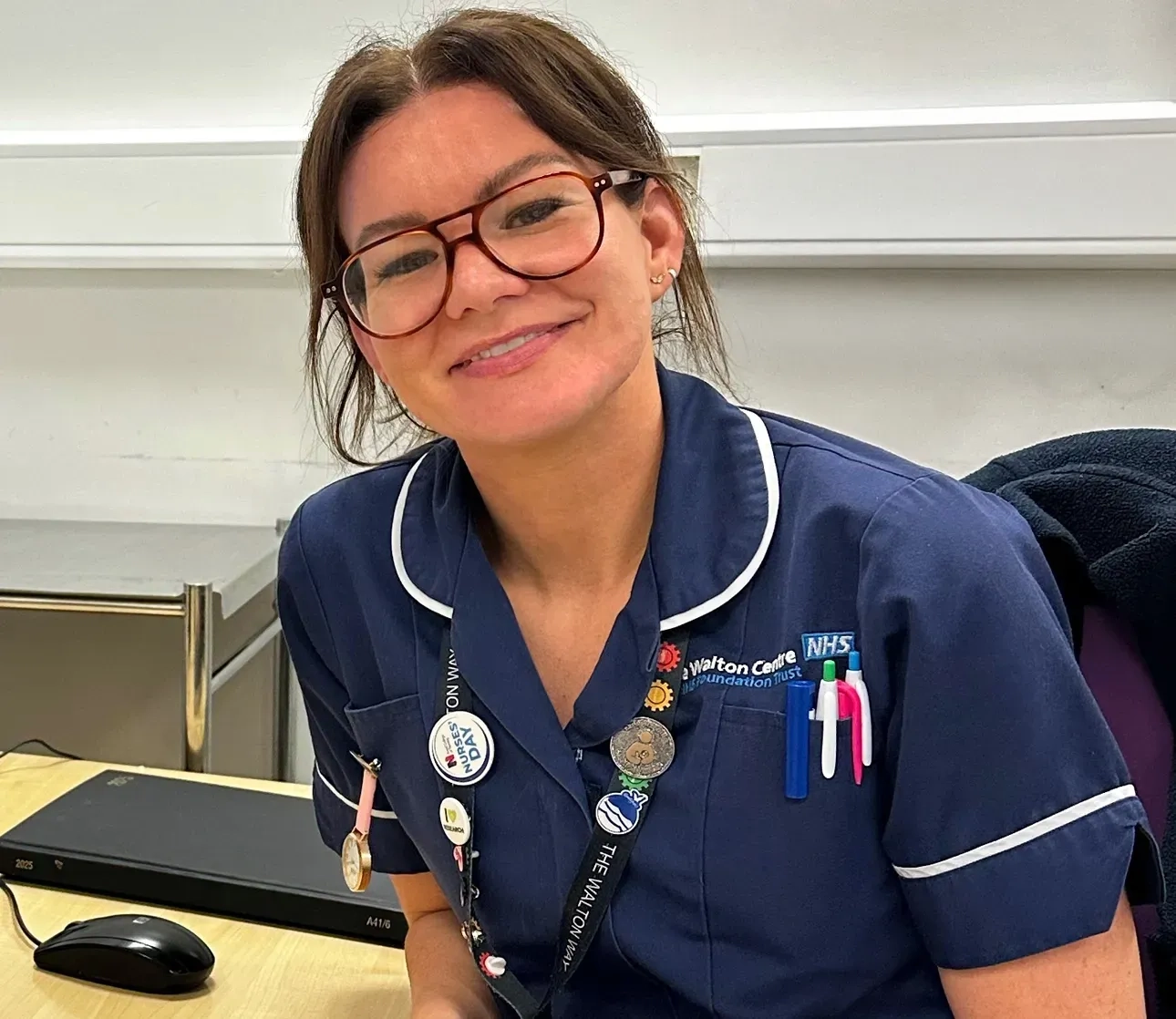
Our Research Nurse Network is going from strength to strength - Rachael Taubman has taken up her role as a Research Nurse at The Walton Centre NHS Foundation Trust in Liverpool.
You can find out more about Rachael in a special question and answer spotlight here:
How would you describe your role to someone you’ve just met?
I’m a research nurse working in MND, which stands for Motor Neurone Disease. I facilitate the MND research we do at our trust, helping to test potential new treatments and improve care. My role consists of supporting patients who are interesting in joining trials, coordinating their follow up appointments, and collecting data throughout their research journey.
What does your typical working day look like?
My typical day can be a combination of performing trial specific assessments, visit planning, and problem-solving - often balancing administrative work, alongside patient’s clinical visits. I often beginning my day by preparing the patients visits, and reviewing the study schedules - which often includes consent, bloods, ECGS, questionnaires, functional scoring or medication checks. Once the visit is complete, I would spend time processing the bloods samples in our laboratory, and shipping them to the study teams for further analysis. I would then spend the remainder of my day responding the emails, or recording any safety reports.
Monitoring symptoms throughout the trial is continuous, therefore we would be required to liaise with neurologists, study sponsors, or pharmacist at any given time.
What made you want to become a nurse?
I have aspired to be a nurse from a young age, from watching my aunty and nan caring for others always inspired me to do the same. I was drawn to a career where I could make a meaningful difference to people during some of the most difficult times in their lives. I value compassion, and advocacy, and nursing allowed me to have the privilege of doing this.
What attracted you to your current role?
I worked as an Accident and Emergency Sister prior to this role, and I began to feel that I wanted to do more than provide care in the moment. I saw many patients in distress, which led me to think more about how conditions could be prevented and how the care we delivered could be improved. Research naturally interested me because I wanted to help improve treatments and outcomes for patients, and hopefully prevent people from becoming so unwell in the future. Working in research allows me to combine patient care with innovation, learning, and the opportunity to contribute to advances in healthcare.
Who has had the biggest impact on your career?
The biggest influence in my career has been the senior nurses who supported and encouraged me throughout my development. Working alongside experienced nurses taught me not only clinical skills, but also the importance of teamwork, resilience, and how to remain calm under pressure. Their mentorship gave me the confidence to grow professionally and inspired me to continue progressing in my career. Without the unwavering support from my previous team leader, who always encouraged and believed in me, I simply wouldn’t be in this role today.
What do you enjoy most about your role?
What I enjoy most about my role is being able to spend time with patients and knowing they feel listened to and valued during what can often be a very difficult time in their lives. This is very rewarding, as I leave work feeling that I have made a positive impact.
What I now enjoy even more since being appointed as the MND network nurse is the opportunity to further develop my knowledge and skills in Motor Neurone Disease research. I am really looking forward to networking with other MND research nurses, sharing knowledge, and gaining insight into how different local hospitals operate. This is an exciting opportunity for me, as I feel it will enable me to make an even greater difference to patients and their families.
What’s been the stand-out moment in your career so far?
The stand-out moment in my career was when a patient I supported wrote an article about her experience, which was published on an MS website. In it, she praised the care and support I had provided during her time on a clinical trial. She shared how supported and reassured she felt throughout her care. This was a very proud moment for me, as it reflected the importance of the relationships we build with patients and reinforced the value of compassionate, patient-centred care. It also made me feel proud of the team I work with and the standard of care we deliver.
What are your ambitions for the future?
My ambition is to take on greater responsibility within the research team, supporting service development and helping to improve patient access to research. The patients we see and treat within our trust, often travel far and wide, and have limited ability to take part in clinical trials. Ultimately, I would like to bridge that gap, and ensure that all patients within our catchment area are aware of the research we do. It would be extremely fulfilling, if I was able to help increase the proportion of patients who are able to access and participate in research.
What advice would you give to someone who wanted a job like yours?
I would encourage anyone with an interest in innovation and improving healthcare to explore research nursing. It is a rewarding role that involves managing trial documentation, and data entry, often within tight timeline. Strong attention to detail and organisational skills are essential, so if this is a personal strength, research nursing could be an excellent career path.