June 2026 Volunteering
Meet Chris...
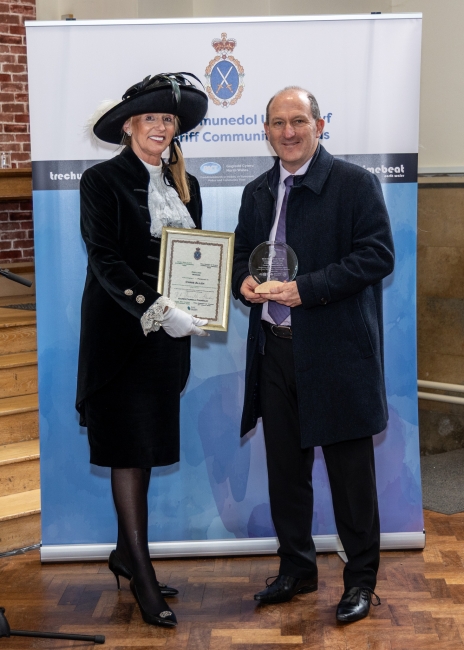
Chris, a retired electrical engineer, shares his experiences with MND and volunteering. His wife, Brenda, was diagnosed with MND in 2005 at age 44. Chris highlights the increase in structured support and awareness of MND now. He has been volunteering with the MND Association for 18 years, initially through his local branch and now as an AV. In March 2025, Chris received the High Sheriff of Clwyd Award for his contributions to his community through volunteering.
We interviewed Chris about his MND experiences in May 2025.
About me
My name’s Chris Allen. I retired from being an electrical engineer six and a half years ago, which has given me more time to volunteer, not just for the MND Association but also for Nightingale House Hospice, which is close to our hearts.
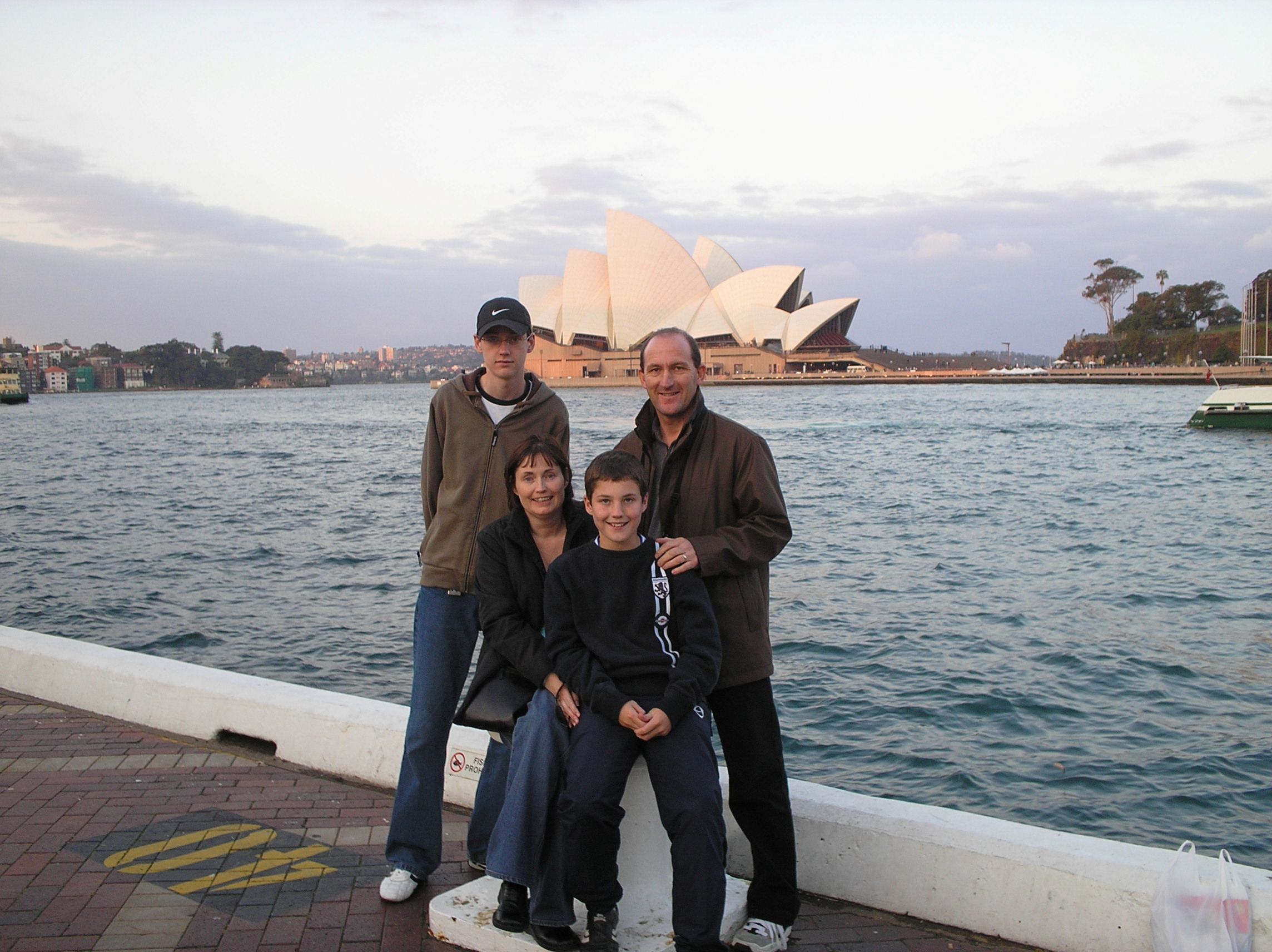
I’ve been involved with the MND Association for 18 years now in various roles. I started on the committee of our local branch – which later became a group – then took on the chair role for eight years. I’ve been an Association Visitor for eight years now, into my ninth. I first got involved after my wife Brenda was diagnosed with MND in 2005, when she was 44. At the time, we had two sons aged 12 and 16. They’re now 35 and 31.
Brenda's MND
MND affected her voice first. She developed a severe slur. I used to joke it sounded like she’d had a few glasses of wine. At one point, I thought she might’ve had a mini stroke, but there were no other symptoms. Her GP, thankfully, was more switched on than most. GPs rarely see MND, maybe one case in a career, but ours knew it wasn’t a stroke. He referred her to the Walton Centre, and after the usual rounds of tests she was diagnosed.
Back then, support was limited. The Community Support Coordinator role was only part-time, and meetings weren’t regular. But within six months of us joining our local branch, things started improving. A permanent Community Support Coordinator was appointed, and support became more consistent.
What made it harder for Brenda was that physically she could still do most things, but her speech made it impossible to continue nursing because communication is incredibly important in the medical world. She loved her job and was heartbroken when she had to stop.
The diagnosis was devastating. Telling the kids was worse. We sat them both down together. Kids aren’t daft and they knew something wasn’t right, so we explained it in simple terms: your mum’s got something called motor neurone disease. We didn’t know how long she’d have, it could be two to five years. It turned out to be two and a half.
Brenda’s MND was devastating, but it also sparked a shift in how we lived. We changed our attitude overnight. We stopped worrying about things we couldn’t control.
The evolution of MND support
Over the years, supporting others through MND has shown me how incredibly brave people with the disease are. I always tell carers, ‘I know what you’re going through’, but the fact is, I have no idea what the person with MND is going through. They’re the bravest people I’ve ever met because there’s only one outcome, it’s just a matter of when.
I volunteer because, to me, it’s about giving something back for the help we received as a family. I have to say, the support now 20 years later is so much better. Not only because of the staff involved but also the increased awareness. I think people feel they’re not alone, that’s the biggest thing. They realise others are in the same boat. That’s a big thing, knowing they’re not alone and they can talk to each other outside the meeting. Seeing them interact, getting peer support — that gives you a warm feeling. Makes you feel like you’re doing something right.
Volunteering and the High Sheriff of Clwyd Award
You can’t put a figure on a person’s time. I got involved, put my name down for the committee of the local branch. Then the chairperson stepped down and I was asked to take over. It just progressed from there. People know they can speak to me anytime they want, but I think some are still hesitant to pick up the phone unless it’s something desperate. You introduce yourself at the start and explain your role and people are usually very appreciative.
I don't find the Association Visitor role difficult, practically speaking. The emotional side can be hard, especially when you get attached to people and then they pass away. That’s the worst bit, really. There’s one gentleman I’ve supported remotely for seven years now. I support him over the phone and he comes to our online support group meetings. That’s the great thing about this role and the advancements in technology, it allows you to support people in the way they want to be supported.
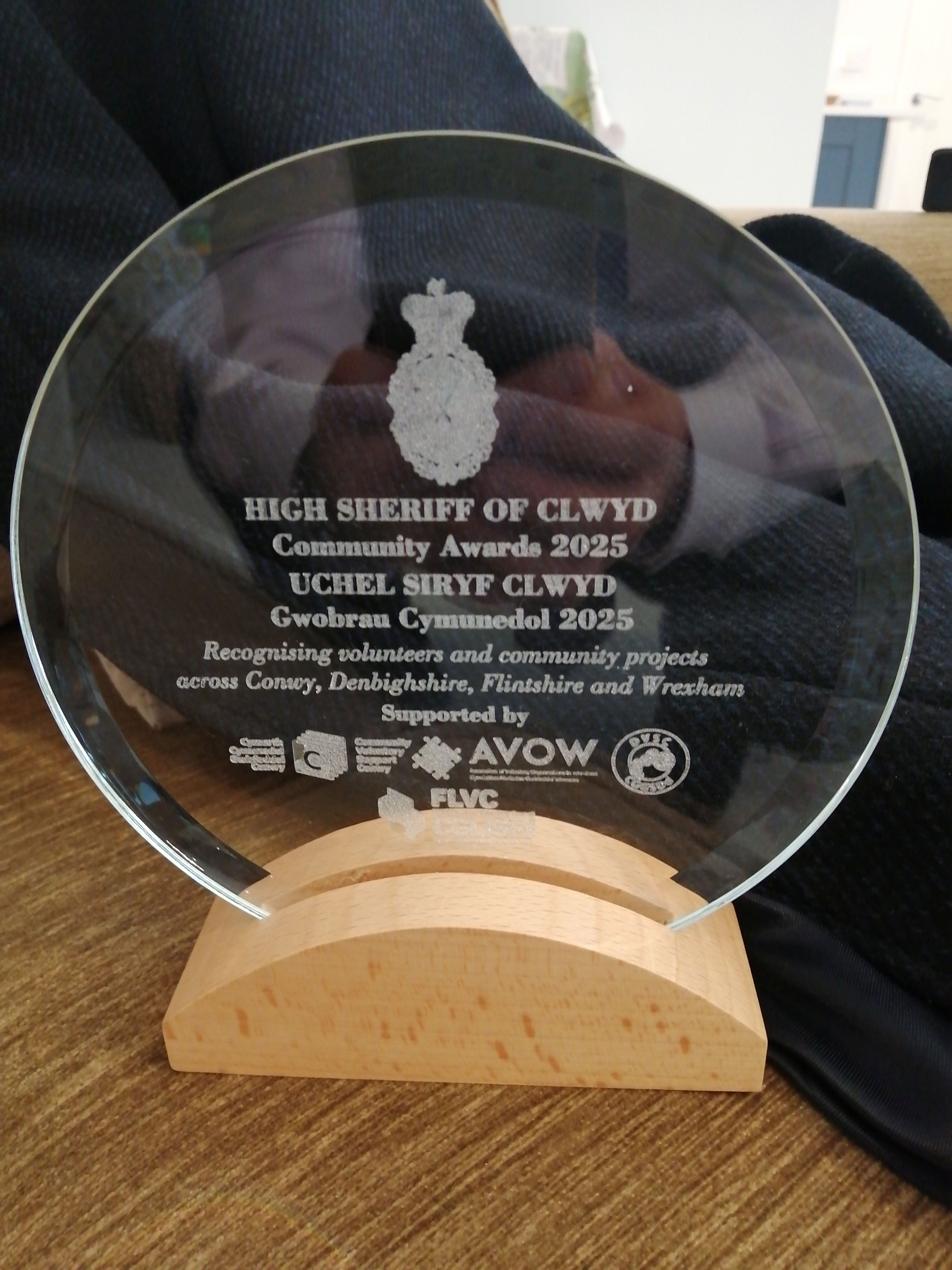
I was recently awarded the High Sherrif of Clwyd award for my contribution to volunteering. I didn’t know I’d won. It wasn’t until I got the programme on the day and saw my name that I realised. The event was great. There was around 200 people there and we had a lovely afternoon tea. One of the best Sue and I have ever had.
The High Sheriff of Clwyd Community Awards recognise individuals and community groups in Conwy, Denbighshire, Flintshire and Wrexham who have contributed to their communities and I won the category for my area. It was great to be recognised for my volunteering and I’m grateful for the award, but it’s not why I do it. Most volunteers don’t do it for recognition, but because they want to give back, to help others.
And the best bit, afterwards, a few people came up to chat. A woman came over and congratulated me, then she said, ‘I think you supported my dad.’ She told me his name, and sure enough, I remembered him. That meant a lot. You don’t always realise the impact you’ve had.
Advice to others thinking of volunteering
If someone’s thinking about becoming an Association Visitor, I’d recommend doing a bit of research. The role is mostly about listening and signposting and it is rewarding. Doing a grant application, getting a care call system installed – those things make a big difference. It’s about asking yourself, ‘how would I cope in their shoes?’ and then trying to help however you can. You can’t say much to someone who’s dying. There are no magic words. But you can try to make their time a little better. That’s all any of us can do.