June 2026 Special Days
Meet Mike...
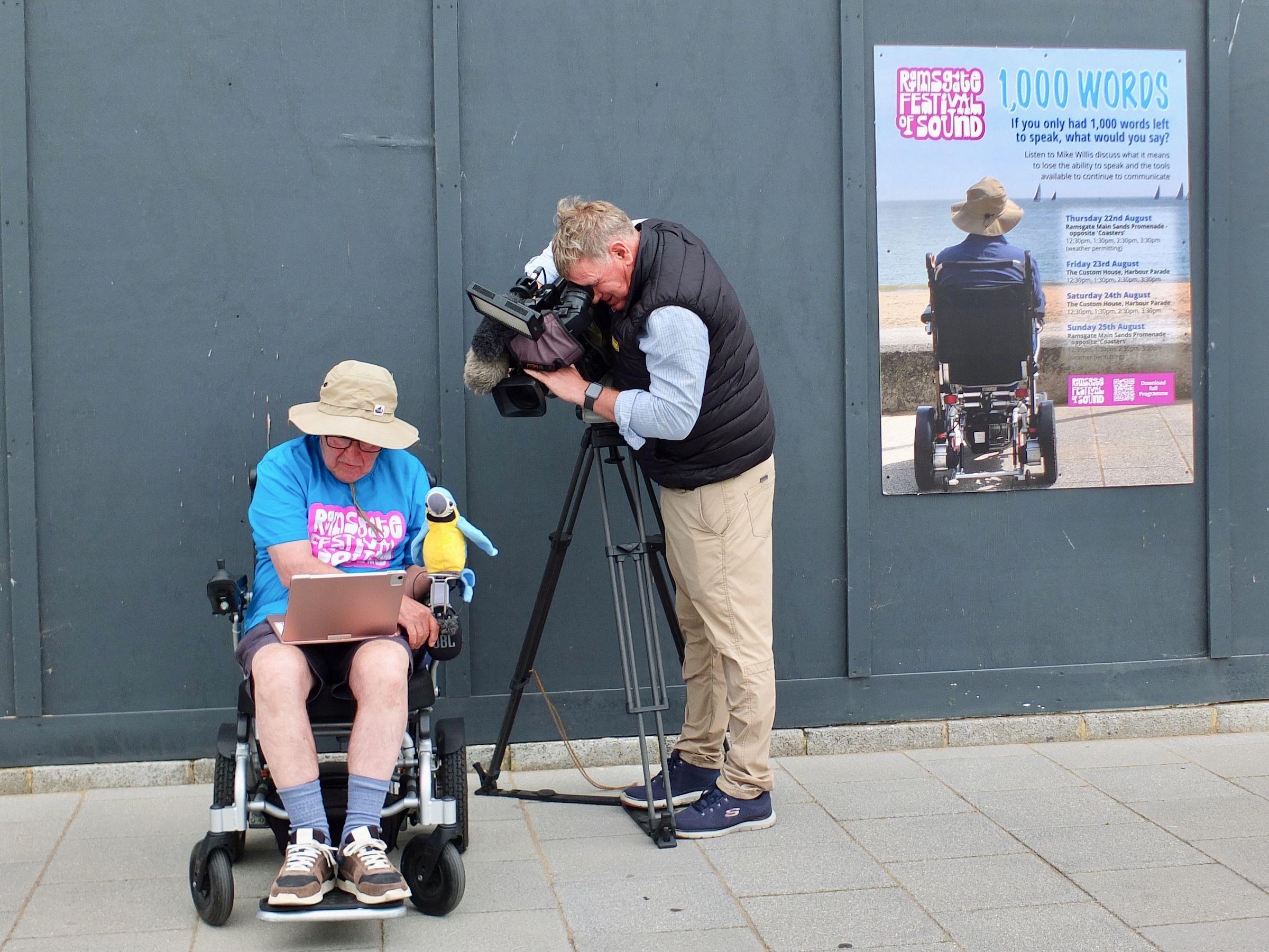
Speaking was a large part of Mike’s life working as a consultant, delivering courses and running conferences. So, when Mike was recording a video message during the pandemic and noticed a change in his voice, he was immediately filled with horror and concern. Mike’s voice was changing because he had motor neurone disease. He decided to clone his voice using cutting edge technology ElevenLabs to maintain his independence, get his voice back and reclaim that part of his identity.

Mike shared his MND experiences with us in June 2026.
My special day
But most devastating, particularly having spent my working life giving presentations, was my deteriorating speech. In 2022 I played back a video message I’d recorded for a US work colleague who was retiring and was shocked to hear the changes to my voice.
I immediately banked my voice but it was already too late, my synthetic voice wasn’t that great. Fortunately, I have hours of videoed presentations etc. so now that AI voice cloning has come along, I’ve been able to create a life-like voice from them.
When I heard my voice for the first time I was speechless! Tears came to my eyes, shortly followed by laughter. That was my voice!!! The worst symptom of my MND had been overcome.
My wife can just about still understand me, but due to my butterfly brain – I frequently change topics mid-sentence – communication is difficult.
Life before MND
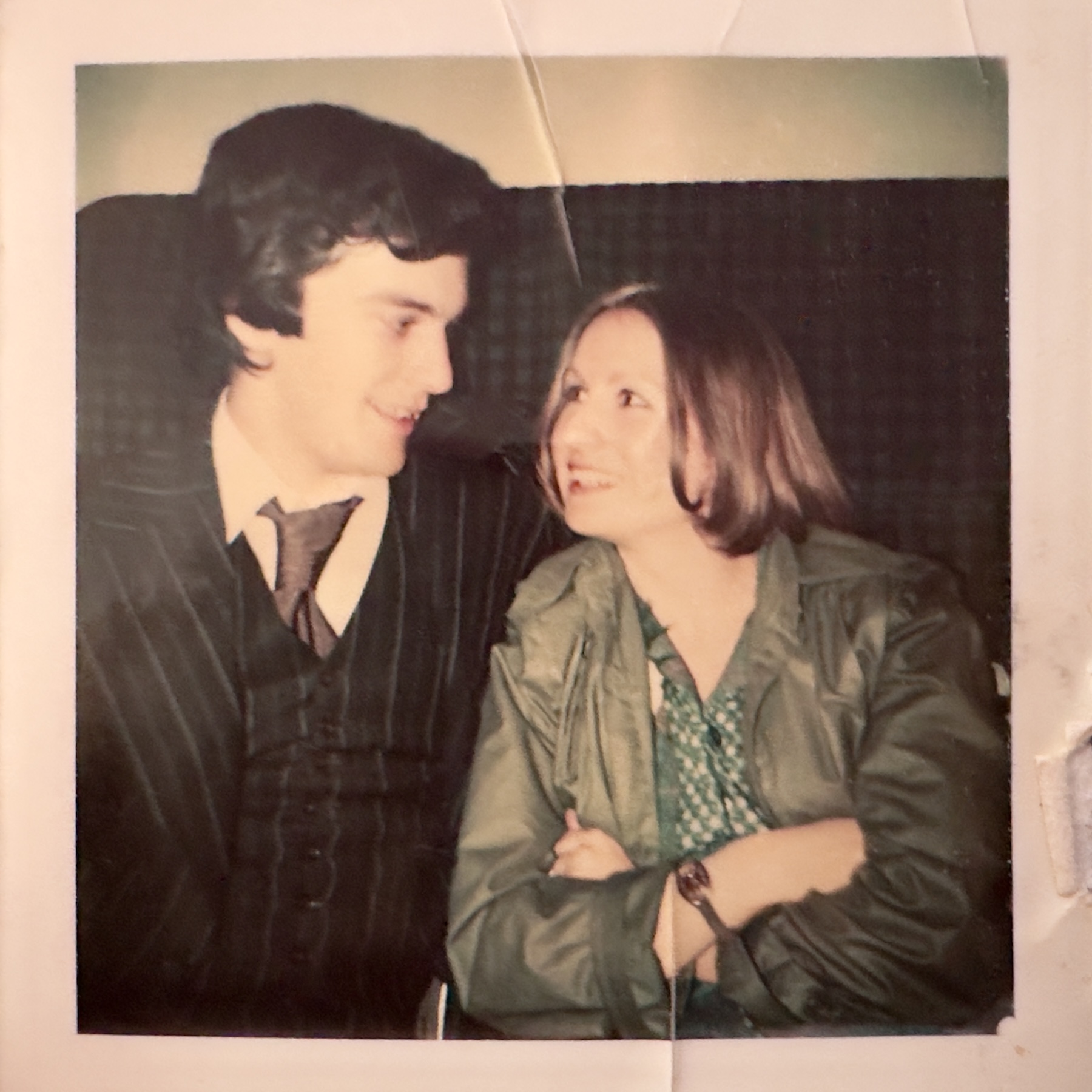
I’m Mike Willis and I live just north of Cambridge with my wife Loraine. We met when we were 16 and in October 2026 we will hopefully be celebrating our Golden Wedding Anniversary! We have three grown up children and four grandchildren.
I was very fortunate to be thinking of retirement when the first symptoms of MND emerged. I spent my whole life working in the digital printing industry, starting by designing photocopiers and laser printers before moving into ink jet technology. I set up and ran two companies related to ink jet printing for 25 years.
One was a technology consulting firm that also published technical reports, and the other organised conferences and courses. This took me to all parts of the world - Europe, USA, Japan, China, India. I was away two weeks every month.
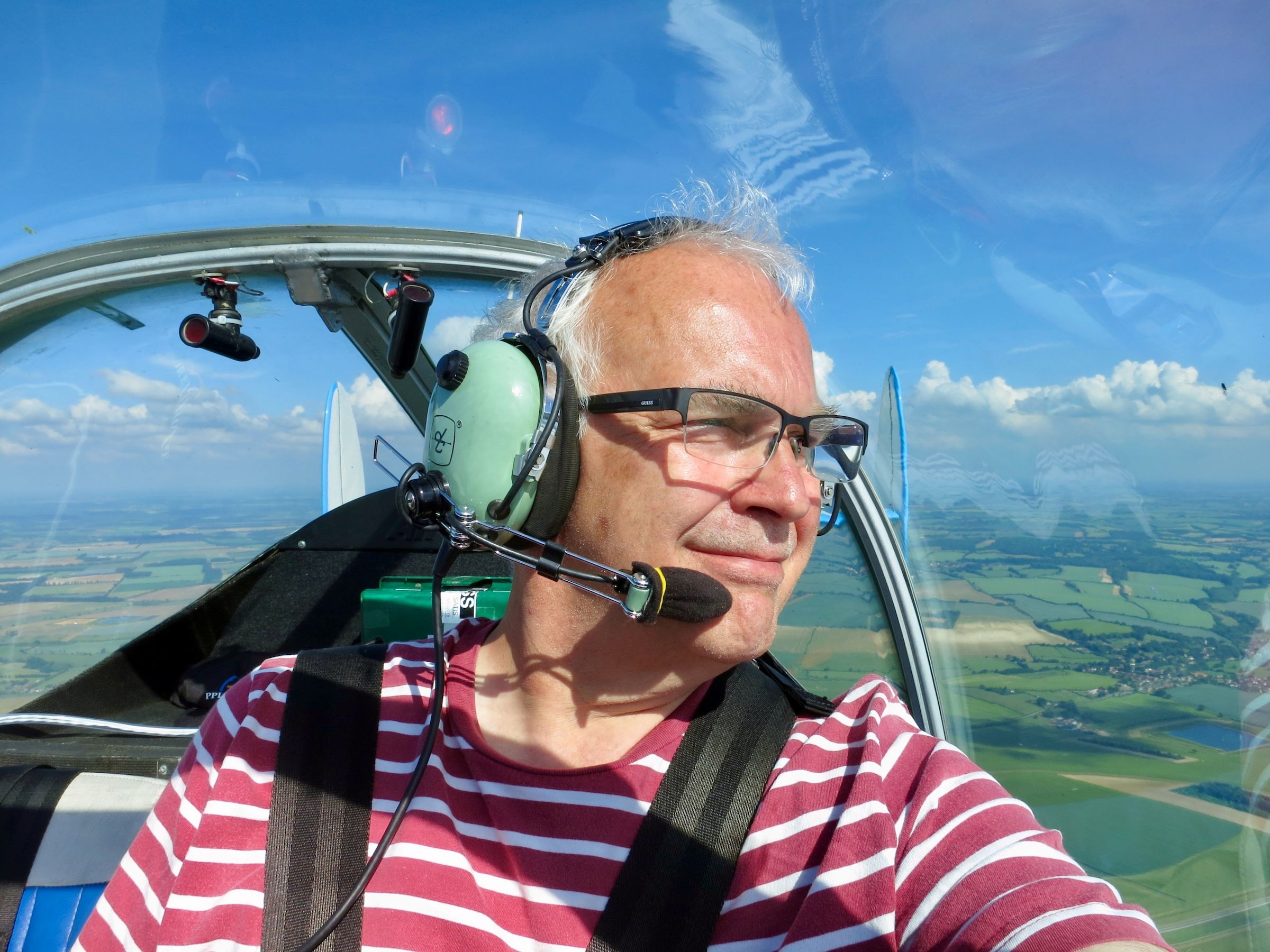
In 2005 I fulfilled a childhood dream and trained for my private pilot’s licence. I bought my own plane, and in 15 years flew just under 900 hours, equivalent to three times around the equator. When I had a weekend in the USA I’d book a plane and go flying – around the Niagara Falls, in the Rockies, around San Francisco Bay.
Life was going very well and with retirement coming up, we were looking forward to travelling the world in the slow lane for a change. But then I started tripping and falling and something was obviously wrong.
Early symptoms and diagnosis
I thought the tripping might be just a stiff right leg and booked a session at a local physiotherapist I knew. I was assigned Kate, who also did physio on thoroughbred horses at Newmarket! After a long examination she told me she thought it was a neurological issue and she would write to my GP. I hadn’t been home long before my GP phoned and said that Kate’s report was so detailed I was referred directly to Neurology at the local hospital.
The Neurology Department in Cambridge looked after Prof. Stephen Hawking, so it has a great reputation and resources. I had the usual range of tests – hammer to knees and elbows, pulling and pushing of limbs, MRI scans etc. The provisional diagnosis was Hereditary Spastic Paraplegia (HSP) – a rarer disease than even MND. By then the first lockdown of the Covid-19 pandemic was upon us. The blood sample for the genetic test to check for HSP was taken at a car park with my arm stuck out of the car window!
The genetic test took until early 2022 for the results and there were no known HSP genes found. My consultant said he was changing the diagnosis to MND.
I was devastated at the diagnosis!
Adapting to and the impact of MND
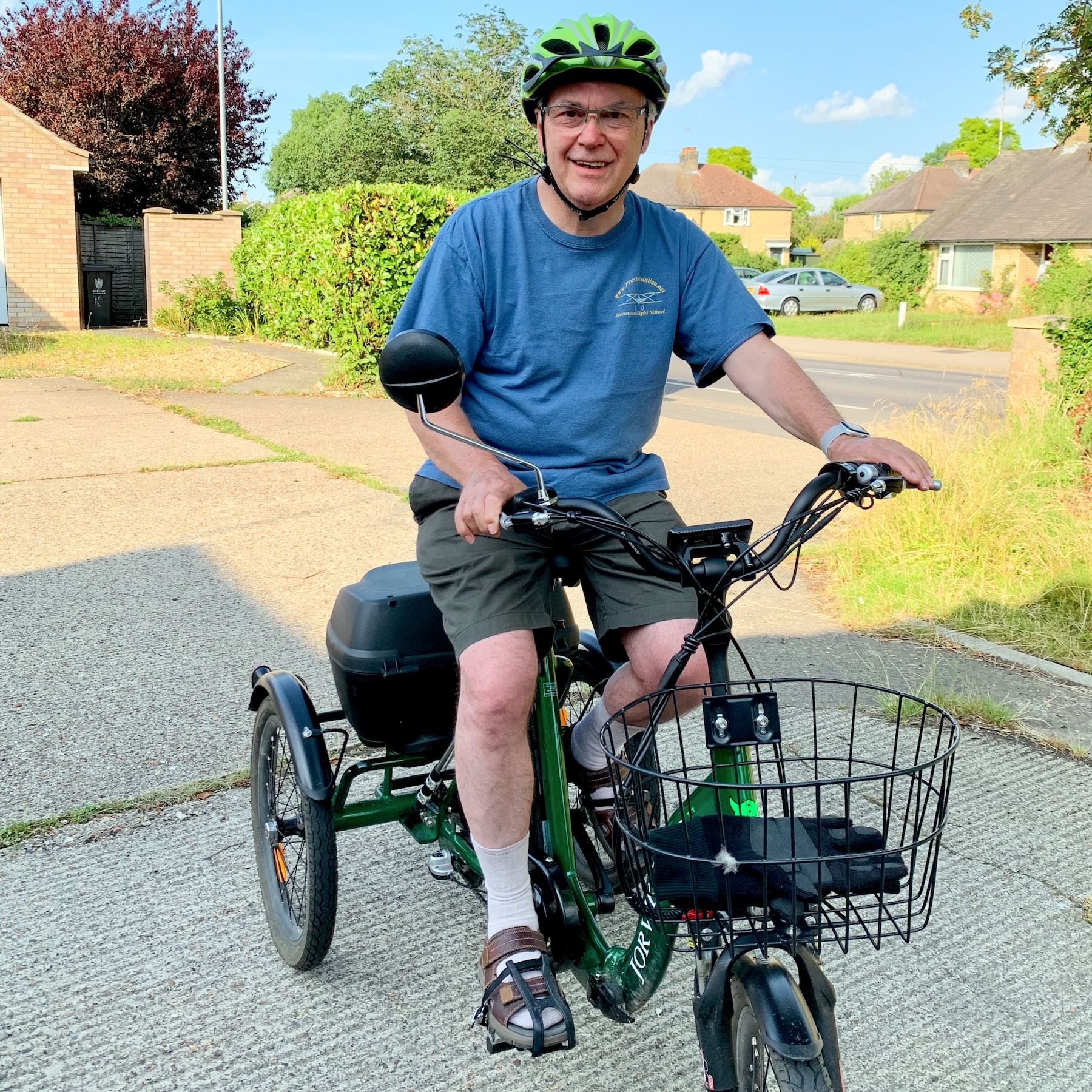
My walking has slowly deteriorated over the past six years. I’ve now got indoor and outdoor rollators which are much safer than sticks and falling is now rare. The loss of body strength means I can't walk far, so for outdoor trips I've got a lightweight powered wheelchair. At the moment I’m walking in the house and garden with rollators and using my wheelchair for anything further.
The other issue with MND that is rarely discussed is how day-shortening it is. I wake at 7am and can still get up, shower and dress myself. I even fry my eggs on toast and wash up after breakfast.
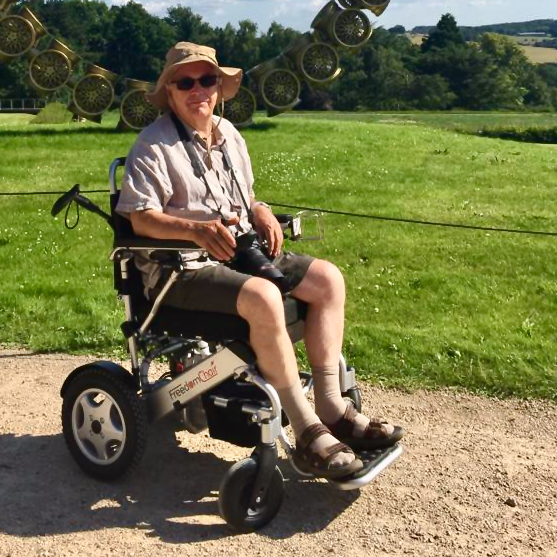
The time by then is 11 – 11.30am on a good day. Lunch takes an hour minimum as I’m now a slow eater, and then there’s a nap. So I have maybe 3 - 4 hours in the day free to do anything. Some friends have asked ‘what do you do all day, read?’ In fact I’ve given up trying to find the time to read books to make way for all the other things I want to do!
Life with MND and Association support
Early on I read somewhere 'accept, adjust, adapt' and that’s been so helpful to think how to live my life with MND. Accepting what is happening was the hardest part by far, but once past that I was able to get on with a much-rearranged life.
I retired from flying and sold my plane at the end of 2020, but I’m still driving and refer myself to driving assessments to ensure I’m safe.
I’ve had to give up cutting the hedges and grass, and almost all DIY jobs around the house. But there’s still lots I can do – my jokey description of this is if a job can be done sitting down, doesn’t involve speaking and doesn’t start until after 11am then I can still do it!
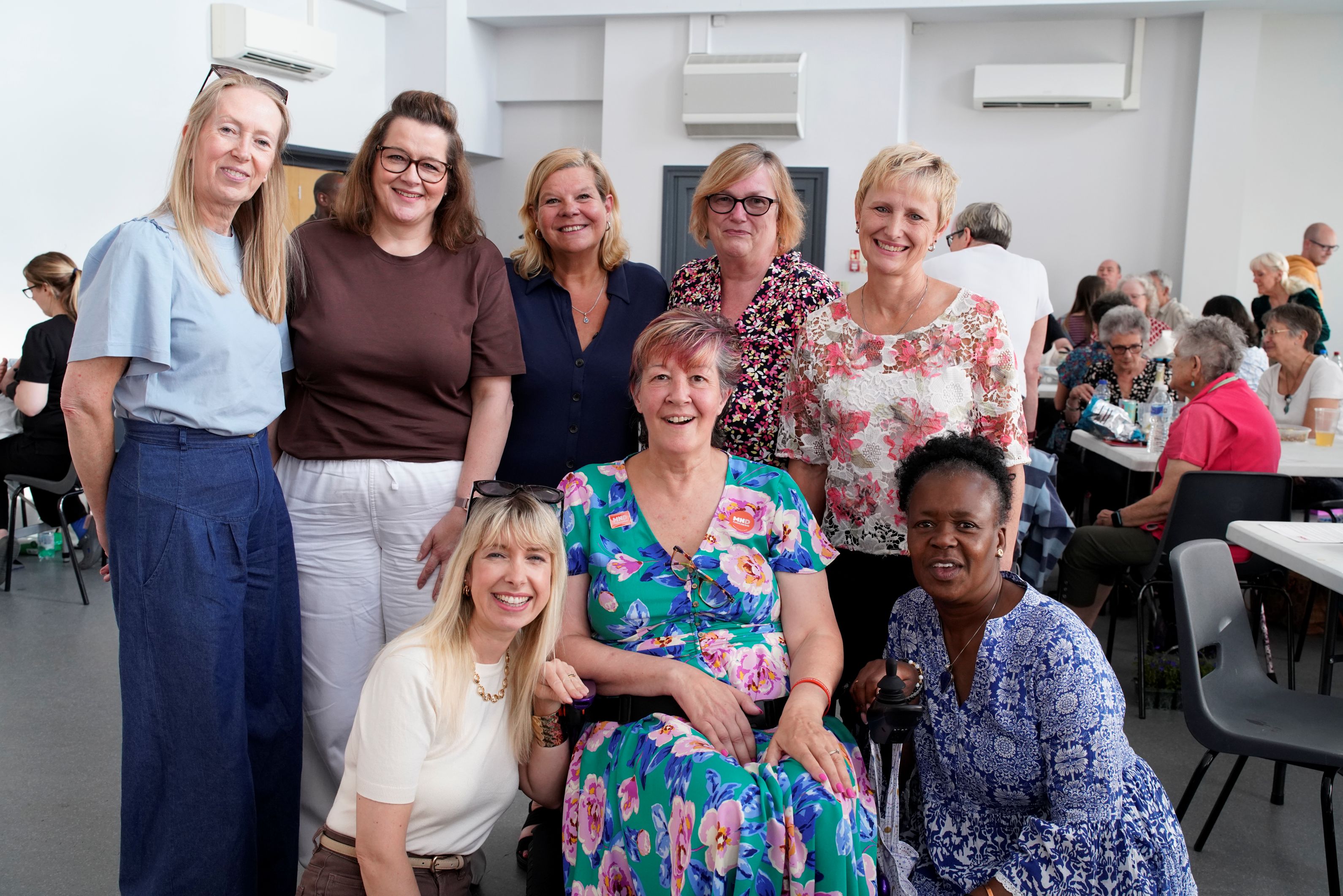
Our local MND Association Branch has recently been through some changes and needed volunteers, so I’m now an official Association volunteer - social media officer and webmaster. The monthly local support meetings are so useful, not so much for me but for my wife who gets to talk to sensible people for a couple of hours rather than struggle with me! I get to sit quietly eating cake and listening.
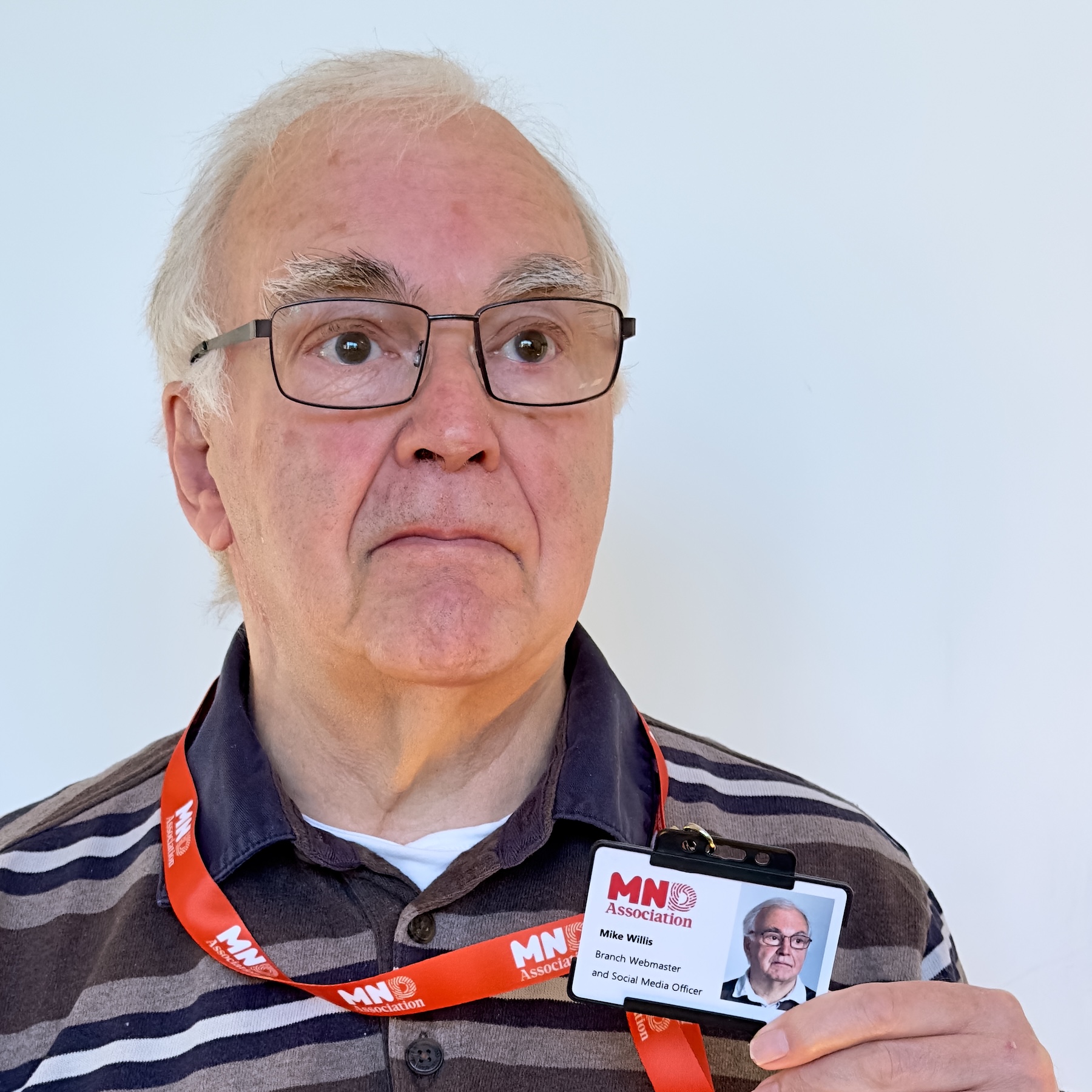
I’ve been using social media to increase awareness of MND for a few years – look for me as No Walkie No Talkie – and have made many friends and found support that way to. Despite my diagnosis, life has a purpose and I’m able to help others and stay positive, at least for most of the time.
The local MND Association Group social get-togethers are really helpful for my wife, but I find the on-line meetings work best for me as I can use the ‘chat’ function rather than try to speak.
Advice to others
Your focus will be quite understandably be on yourself and how this horrible disease will progress and affect you. But don’t forget that your family and friends will be affected too. It’s not just you who will have to adjust your life, but them as well. You’ll be angry and frustrated at times, so try not to take it out on them. They’re going to be helping you through this.