April 2026 Legacy Stories
Meet Sarah...
In 2011, Sarah's dad was diagnosed with MND and lived with the disease for 20 months, adapting his home and continuing with social activities. Then, in a shocking twist of fate, Sarah's mum was diagnosed in 2024. But this time MND took hold, fast. Sarah's mum lived with MND for just 10 weeks from diagnosis.
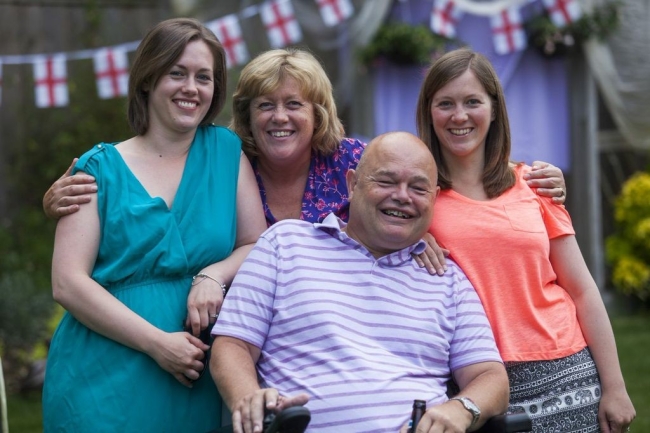
We interviewed Sarah in January 2026.
Life before MND
My name is Sarah. Me and my husband John have been together for almost 25 years and married for 15. We have two boys. George, who is nine and Sam, who is eleven. I have a younger sister, Emma. She also has a son. She lives a few hours away, but we're very close.
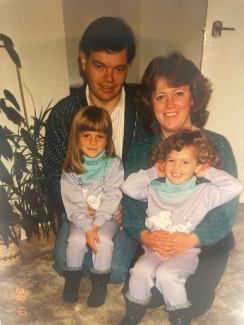
My parents were very outgoing and sociable. Our house was always the one hosting something. They were kind, generous and thoughtful.
Dad was quite adventurous and would travel a lot for work. Despite being adventurous, he was also famously clumsy. His family nickname was 'Crash' because he did everything at full speed, with no planning and not much thought.
Mum was a stay-at-home mum. She was incredibly outgoing, kind and giving. She was very caring. She was heavily involved in the school PTA and she volunteered supporting struggling mothers. She gave so much of her time and emotional energy.
Dad loved hosting big barbecues for his June birthday every year. Mum was the one behind the scenes making everything happen. She changed a lot after Dad died. They met at 14 at school so they had been together forever. Losing him was incredibly difficult for her. There was ten years between their deaths, and she absolutely never got over losing him. She really struggled without him. They truly were each other’s person.
Dad's MND
Dad started falling over, but we just assumed he was being clumsy. At first, it wasn’t out of character but it kept happening. He kept falling and it was always the left leg going wrong.
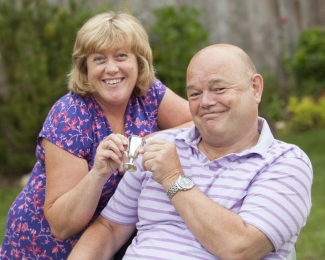
I got married in December 2011 and Dad had been struggling badly with walking. We weren’t sure how he would manage to walk me down the aisle. He saw someone privately and had scans. They diagnosed him with muscular dystrophy in March. We spent twelve months believing he had muscular dystrophy. Dad was devastated, because muscular dystrophy is genetic. He was very upset because he didn’t want Emma or me to be impacted.
When Emma got engaged Dad was desperate to walk her down the aisle but he was losing his legs. There was a neuromuscular centre in Coventry, and he started going there for physio. Her wedding day came and the occasion was too much for him. He and Emma started walking down the aisle, Dad managed about five steps before his legs went. The hotel manager wheeled in a wheelchair and Dad held Emma’s flowers whilst she wheeled him down the aisle. That was the last we saw him walk. He didn’t take another step again. But that moment was such an example of who he was. He must have been devastated, but in the photos he is absolutely beaming, holding these bright pink flowers and Emma is beaming behind him. He wasn’t going to ruin her wedding day. He wasn’t going to make it about him.
We continued on with the muscular dystrophy diagnosis. Then in the March after Emma’s wedding Dad went to see the neurologist about the muscular dystrophy and was told it wasn’t muscular dystrophy, it was motor neurone disease.
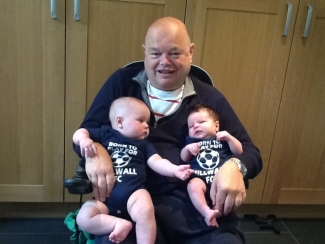
In 2006, mum and dad bought their dream house just a few doors down from the family home. It’s heartbreaking they hadn’t been there very long before Dad started showing symptoms. They had this dream of what life would look like, finally in the house they loved and it was pulled away from them. But it was a lovely big house. It had a downstairs bedroom and they extended it to add a large wet room meaning Dad was able to stay at home. He loved his garden, so they put French doors and a ramp leading straight out to the patio. They installed an electric hoist and a specialist toilet.
Before he was diagnosed with MND, he had a group of guys he’d meet quarterly for dinner. After his diagnosis they changed the arrangements and would stay in a hotel near my parents’ house, picking him up in an adapted taxi so his electric wheelchair would fit.
Dad was diagnosed in March 2013 and he died in December 2014. They’d told him life expectancy was around two years. In reality, he probably had around four years from the very first symptoms. In between all that, my sister and I had babies. The one blessing is that he met two of his grandchildren.
Mum's symptoms and diagnosis
It was very quick with Mum. She had a knee replacement in July 2024 and recovered beautifully and by mid-October she was doing brilliantly. Then she got Covid. She was quite poorly for two weeks and then by November, she began saying she was struggling with her left foot.
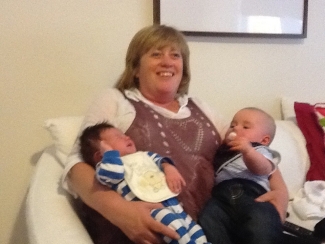
Mum was convinced it was MND, but we reassured her the odds of it happening again were tiny. I thought it was linked to her knee replacement. She saw the consultant again but they found nothing of concern. Then she started falling over and that changed things. At that point, we hadn’t realised the scale of the decline.
Mum had seen the knee consultant who found nothing wrong and referred her to someone for her back. He did an MRI of her spine and told her she needed to see a neurologist. He referred her for a brain MRI and to a neurologist. She didn’t get her brain scan results until January so over Christmas we were in limbo. Unfortunately, the neurologist she was referred to was the same one Dad had seen. He is lovely, very kind and very experienced but once you’ve been through this once, you don’t want the same doctor sitting in front of you.
We had an appointment in early January and when we met with Dr Silva. Mum was in floods of tears. She said, ‘It’s MND, isn’t it? I want you to tell me. I want to know what’s happening to me.’ He said he really didn’t think it was MND but he couldn’t rule anything in or out. He said he would expect dramatic weight loss, swallowing issues, voice changes. I reminded him Dad never had any of that. His voice never changed and he never lost weight.
We went back on the 3 of February and by then, she couldn’t brush her teeth because the electric toothbrush was too heavy. She couldn’t brush her hair, she couldn’t move her feet, so she was using equipment to get on and off the toilet and in and out of the shower. I’d written pages of notes about her deterioration. Dr Silver was different that day. Still kind, still warm, but quieter, more reserved.
Mum said, ‘It’s MND, isn’t it?’ He said, ‘Yes.’
Mum was in a care home and two carers were washing her one morning when she suddenly went grey and passed out. She came round briefly, struggling to breathe and managed to say, ‘get my girls.’ By the time the nurse returned from calling us, Mum had gone.
She was incredibly brave. I actually think it takes a different kind of bravery to keep breathing when you know exactly what’s coming, because you watched it happen to your husband and now you’re facing it alone. She didn’t have Dad beside her. She didn’t have the same sense of joy to pull her through.
Association support
Our experience with the MND Association has always been brilliant. With Dad, there were offers of volunteer companions and support groups that helped him so much. He had a special chair, advice on wheelchairs, Motability vehicles, everything. It felt like we always had someone to ask.
When Mum was diagnosed we used half term to take the kids to stay at her house and visit the care home. Then we took them home and explained everything. Why she was in a wheelchair, what MND is and then took them straight back the next day so they could see she was still the same nanny as the day before. The resources from the MND Association’s Children and Young People team were incredibly helpful. The books, memory boxes, the little cuddly elephant.
Reflections and advice to others
It’s hard to compare Dad’s experience and Mum’s because things have changed so much. There’s more awareness now. When we fundraise or talk about our story, people know about MND. There’s definitely more public understanding thanks to people like Rob Burrow and Kevin Sinfield.
But the support we got for Dad from the NHS felt better. Things were less stretched, less slow. We never even got Mum a breathing assessment or lung capacity test. It was booked for the Monday, and she died on the Friday. Everything was just too slow. We went private for all of Mum’s tests, for the care homes, everything. Everything happened so fast with Mum’s MND there wasn’t much time to process anything. There was constant admin, constant doing. There wasn’t space to sit and feel.
My advice would be to take your time to process things and be kind to yourself. After Mum’s diagnosis, I tried to go back to work too quickly. I had a complete breakdown. I needed time, I needed walks at lunchtime, I needed nature. Someone else might need a glass of wine on a Tuesday or a bar of chocolate. Do whatever helps, but you have to cut yourself some slack. This is happening to your loved one and that’s terrible, but it’s also happening to you, so be gentle with yourself.