20 July 2026 Research
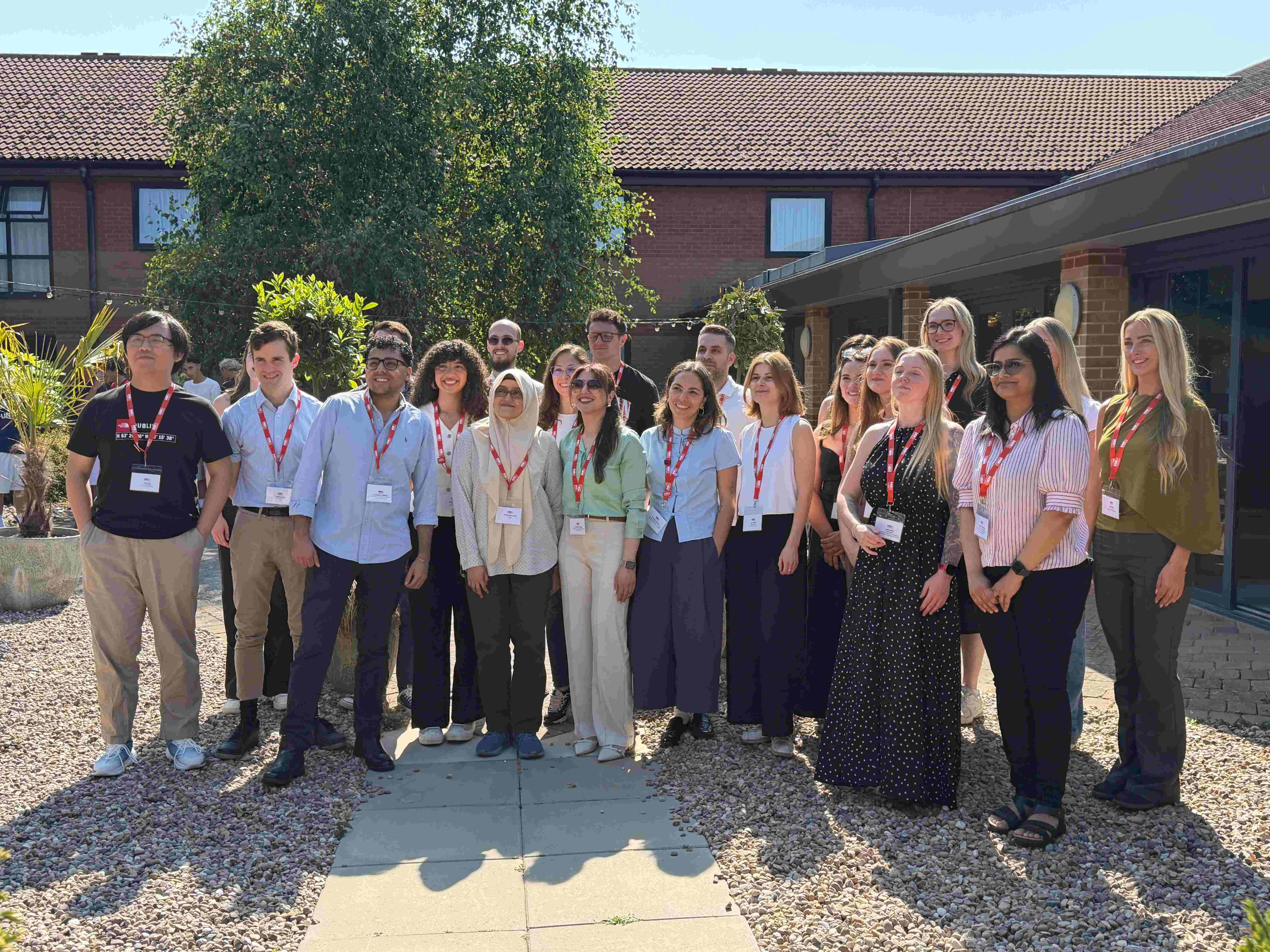
More than 20 promising young researchers attended MND EnCouRage last week - the MND Association’s flagship event for the researchers of tomorrow.
Held in Loughborough from 14-15 July, early career researchers (ECRs) specialising in MND were given the chance to broaden their peer networks, learn from experts and engage with the wider community.
This event was so worthwhile. I want to keep working in MND research so being able to connect with others in my field and having one to one conversations with senior researchers has been so useful
Alyssa Corbett, ECR
We invest in the brightest and best young researchers to ensure the next generation of talented scientists are poised to drive progress in MND research.
Our annual MND EnCouRage event, designed for early career researchers (ECRs), is one of the ways we do just that.
To go beyond the lab, ECRs also met people affected by MND – some for the first time in their career - giving them a better understanding of the impact of the disease and what research people affected by are most interested in seeing.
I've been able to meet people with MND and interact with other researchers in the field. EnCouRage renewed my passion and motivation to continue working on MND. I can see who I'm helping and why.
David Orsulik, ECR
The event
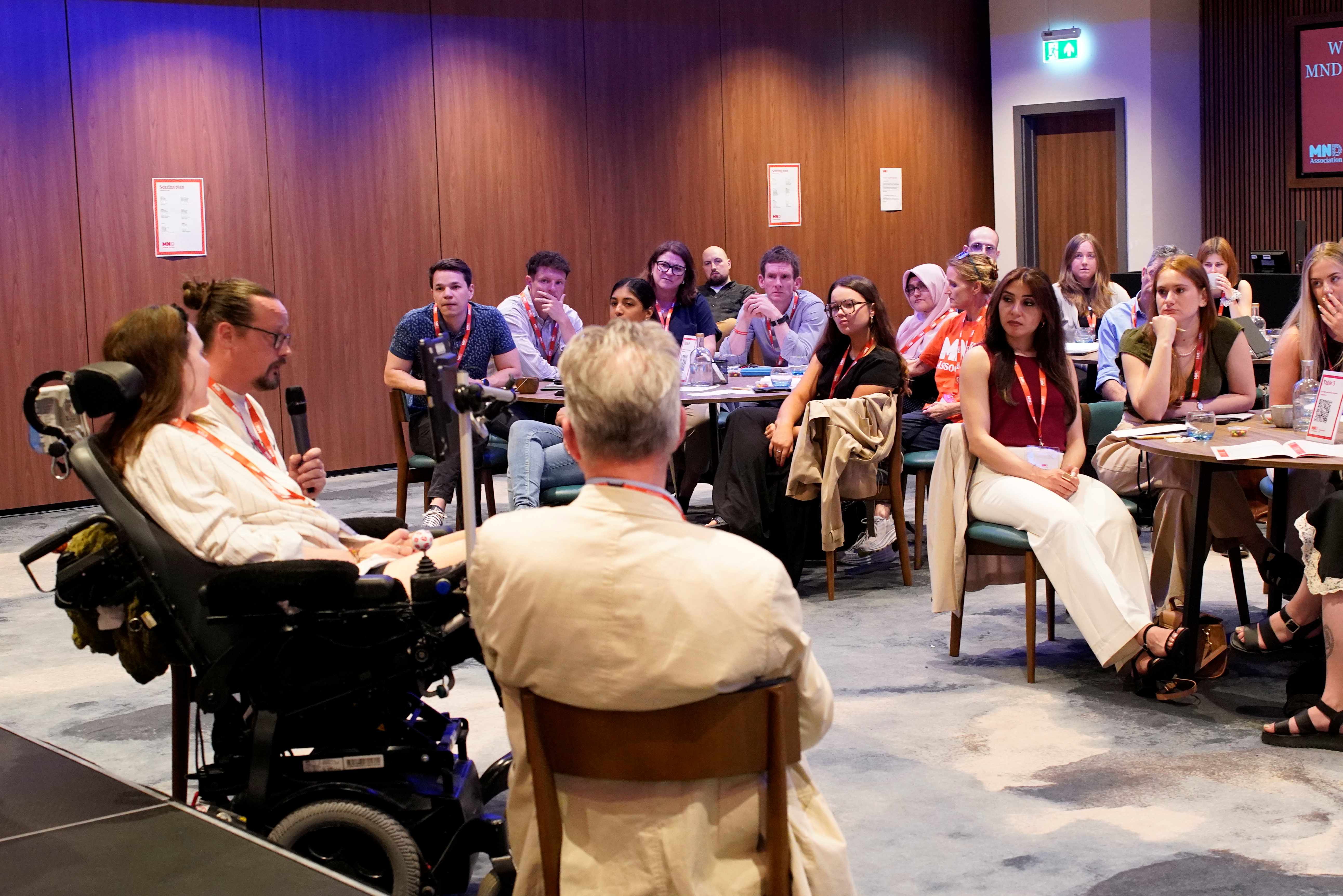
After hearing from communication experts about how best to explain their work, each ECR had the nerve-wracking opportunity to give a three minute ‘lightning talk’ – a summary - to the audience of peers, senior researchers and people affected by MND to describe how their research fits into the bigger puzzle - ultimately finding a cure for MND.
It's good for researchers to understand what people with MND go through and the ways in which their research can help. These events are good for people with MND too so we can see what researchers are working on and what could be of benefit - the quicker the better.
Stephen Rees, who is living with MND
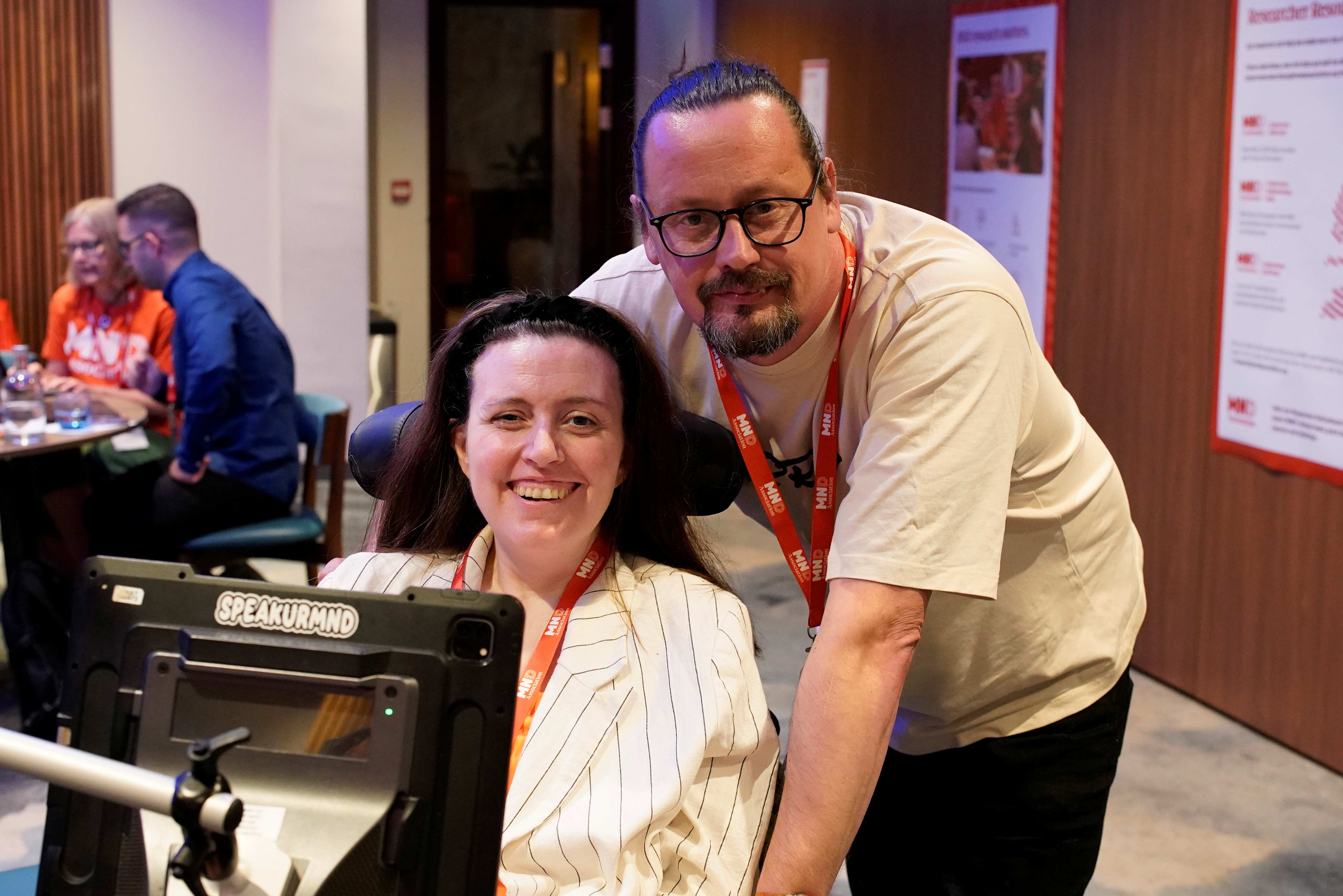
An interactive clinical trials session, led by Professor Ammar Al-Chalabi, Clinician Scientist at King’s College London, also gave ECRs and people affected by MND a chance to discuss the nature of clinical trials, examine different trial designs and exchange views on both previous and current trials and results.
Being able to meet people with MND and see the impact our research can really have allows you to appreciate that what you're doing in the lab can have real potential benefit
Dr Katie Hanna, Senior Researcher
If we want a future where MND is treatable, we must support the people who will deliver that future – early career researchers. Our focus is on turning discoveries into the breakthroughs people with MND need and without delay. Encouraging collaboration in this way, along with our support of researchers at every stage of their careers, keeps the pipeline of MND research experts strong. Other countries are now following suit, starting similar ECR events in their regions.
Dr Nick Cole, Head of Research at the MND Association
Now UK MND EnCouRage is over for another year, the MND Association is focused on preparing for the 37th International Symposium on ALS/MND, the biggest annual conference dedicated to ALS and MND research, taking place from 9-11 December in Amsterdam.
Read more about MND EnCouRage UK 2026 in our research blog.