People living with MND share how they communicate in everyday life.
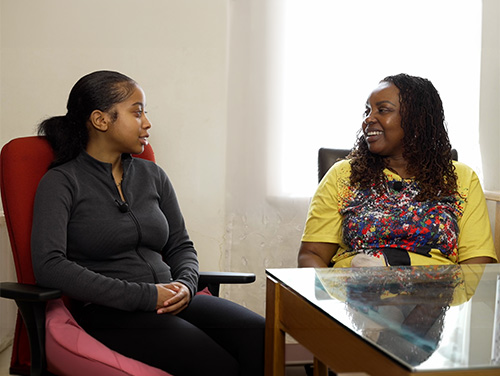
Yvonne and Kayla
Yvonne and Kayla discuss what helps when Yvonne is communicating with strangers and how different factors affect her speech. They highlight the importance of patience, asking for repetition when needed, and using text on Yvonne’s phone to support communication.
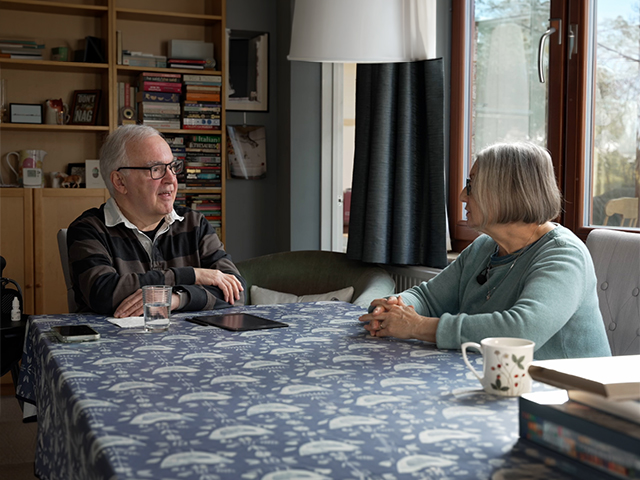
Mike and Loraine
Mike and Loraine discuss the importance of being understood and the challenges people can have understanding Mike’s speech. They reflect on how strangers may pretend to understand, and Mike explains how making notes on his phone helps reduce the need to speak during appointments.
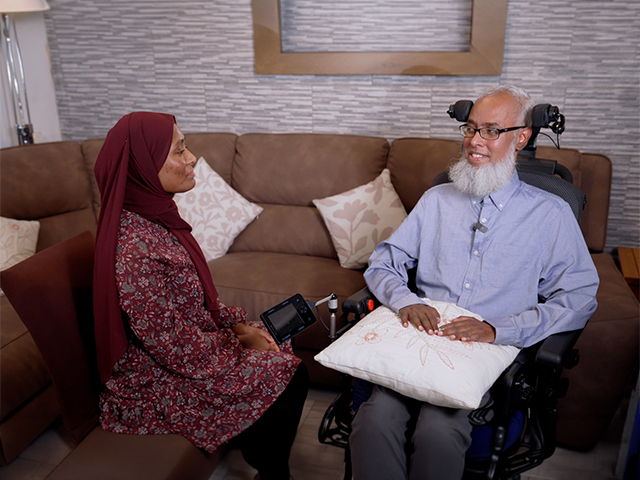
Suyal and May
Suyal and May discuss how changes in Suyal’s speech mean he often has to repeat himself for strangers to understand. They highlight the importance of giving him time to finish sentences. Suyal reflects that although his thinking remains quick, expressing himself has become more difficult.
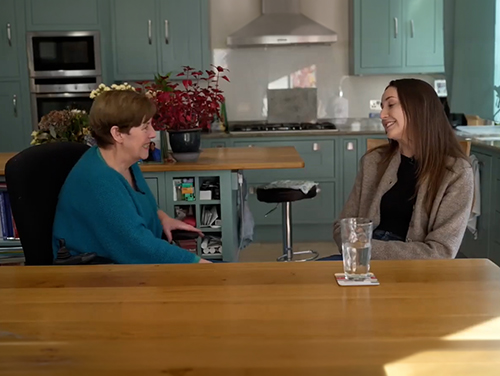
Caroline and Lois
Caroline and Lois discuss what helps when communication becomes difficult, including sounding out words and watching facial expressions. Caroline explains how writing on a whiteboard can help when others don’t understand, and how the chat function in Teams calls supports communication at work.
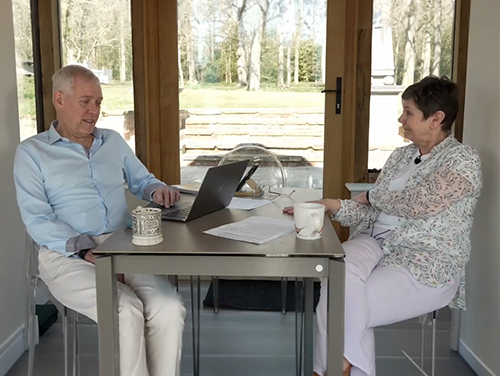
Andrew and Rosaleen
Andrew and Rosaleen discuss how Andrew uses his artificial voice following the loss of his speech. They reflect on how conversations are now slower as Andrew types to communicate. Andrew explains how text to speech software allows him to type, prepare and save messages in advance.
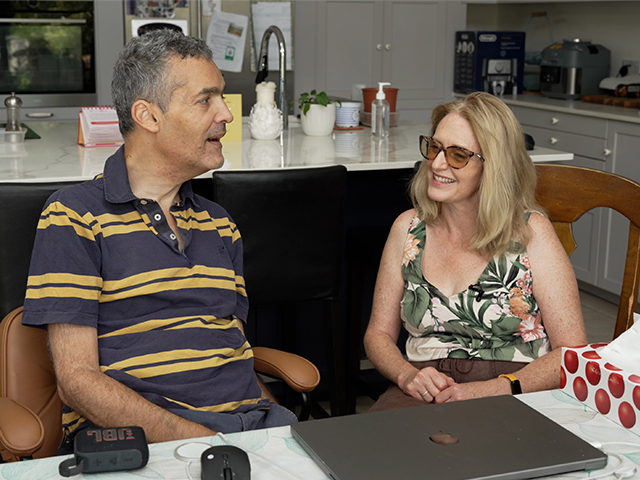
Phil and Louise
Phil and Louise talk about conversations being slower as Phil is using his thumb to text. Phil explains how people need to be patient and give him time to respond in conversations. He talks about the need for people to understand that MND has not affected his mind.
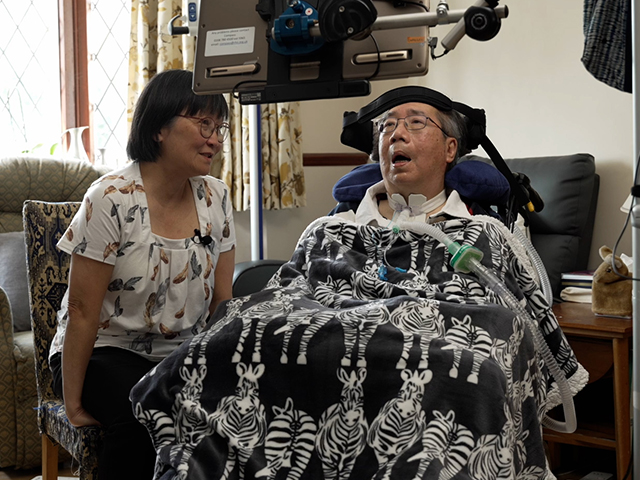
KT and Kuai Peng
KT and Kuai Peng discuss how KT uses an eye gaze computer with his banked voice to have fuller conversations. KT also explains other ways he communicates when not using the eye gaze system, including eye blinks, lip reading and an alphabet chart.