June 2026 Caregiving
Meet Matt...
Matt discusses the challenges of being a full-time carer for his partner Gill who has MND. He highlights the emotional toll and the lack of understanding from others. Matt also discusses the financial strain, the importance of community support and the need for better recognition and resources for carers.
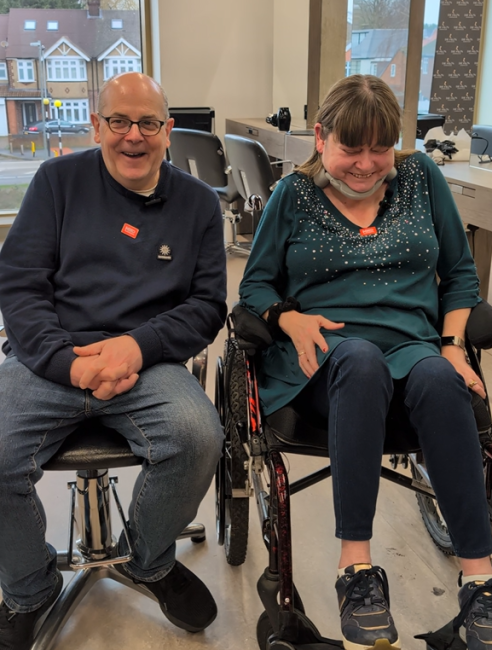
Matt shared his story with us in May 2026.
Life as a carer
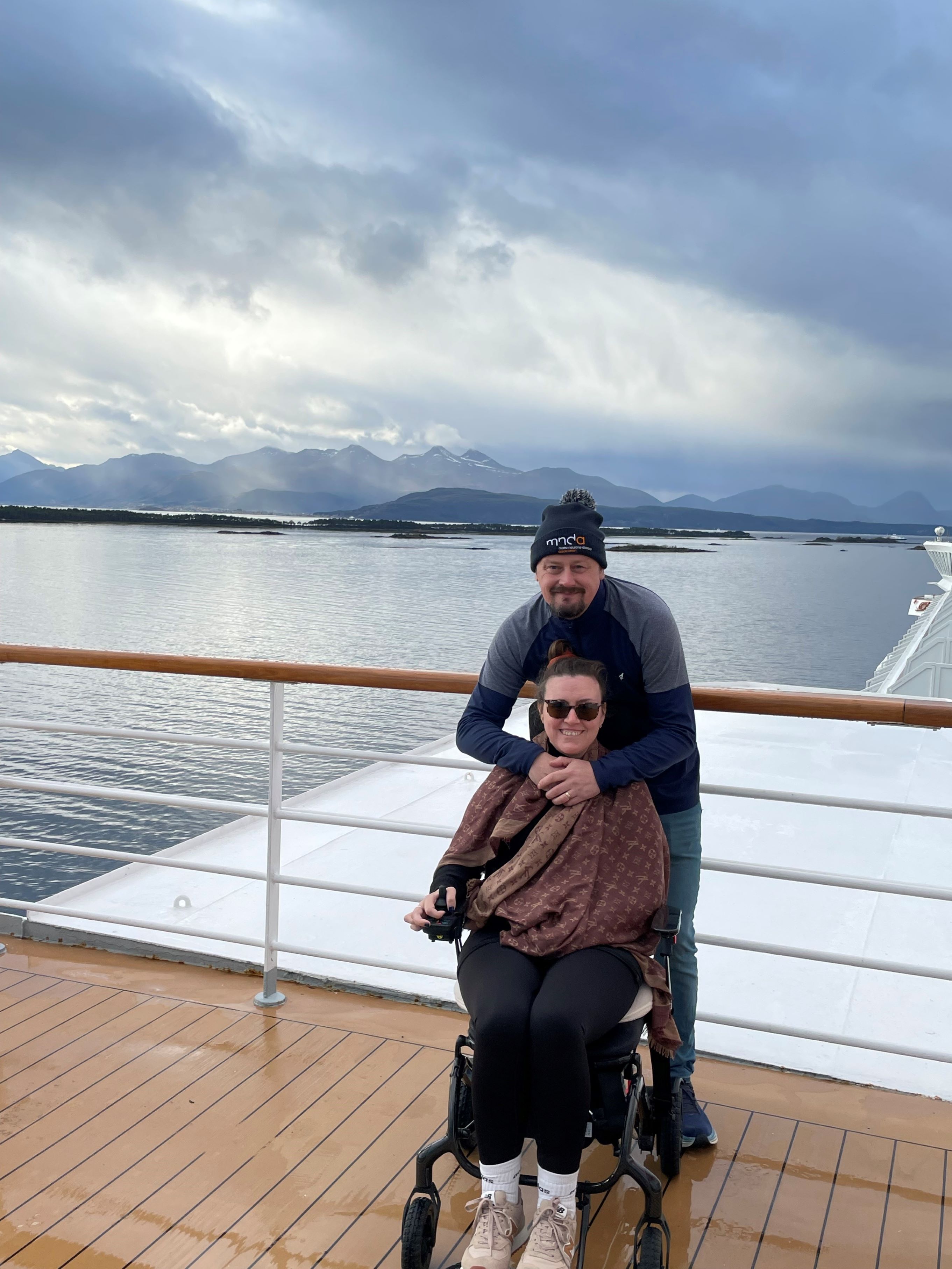
I’m Matt, I’m 57 and live in Luton with my wife Gill. Gill was diagnosed with MND in 2025 but had been experiencing symptoms since around 2018.
What people don’t realise about being a carer, is that I’m on call twenty four hours a day. There’s no switching off. You get into routines. We had a really good night time routine for a while. Almost like a synchronised dance. I’d hand her the toothbrush and while she was brushing her teeth, I’d prepare the mouthwash. We got into a rhythm. Then there’s a little bit of progression, and suddenly she can’t quite lift something, or hold a drink properly, or take medication easily. That routine falls apart. So you make a new one.
That’s how it is all the time. No two days are the same. It can be challenging and I don’t think people really appreciate what caring involves. You’re on duty all the time.
There can be a lot of isolation. Especially when big jobs are happening like moving furniture or adapting the house. It’s actually quite hard to reach out for help. People are busy with their own lives, which I understand. But it’s surprising who disappears. People you thought would be there don’t always show up. That’s been one of the hardest parts for me. Realising that carers don’t always get the support they expect. It’s opened my eyes to how isolating this can be.
Emotional and practical impact of caring
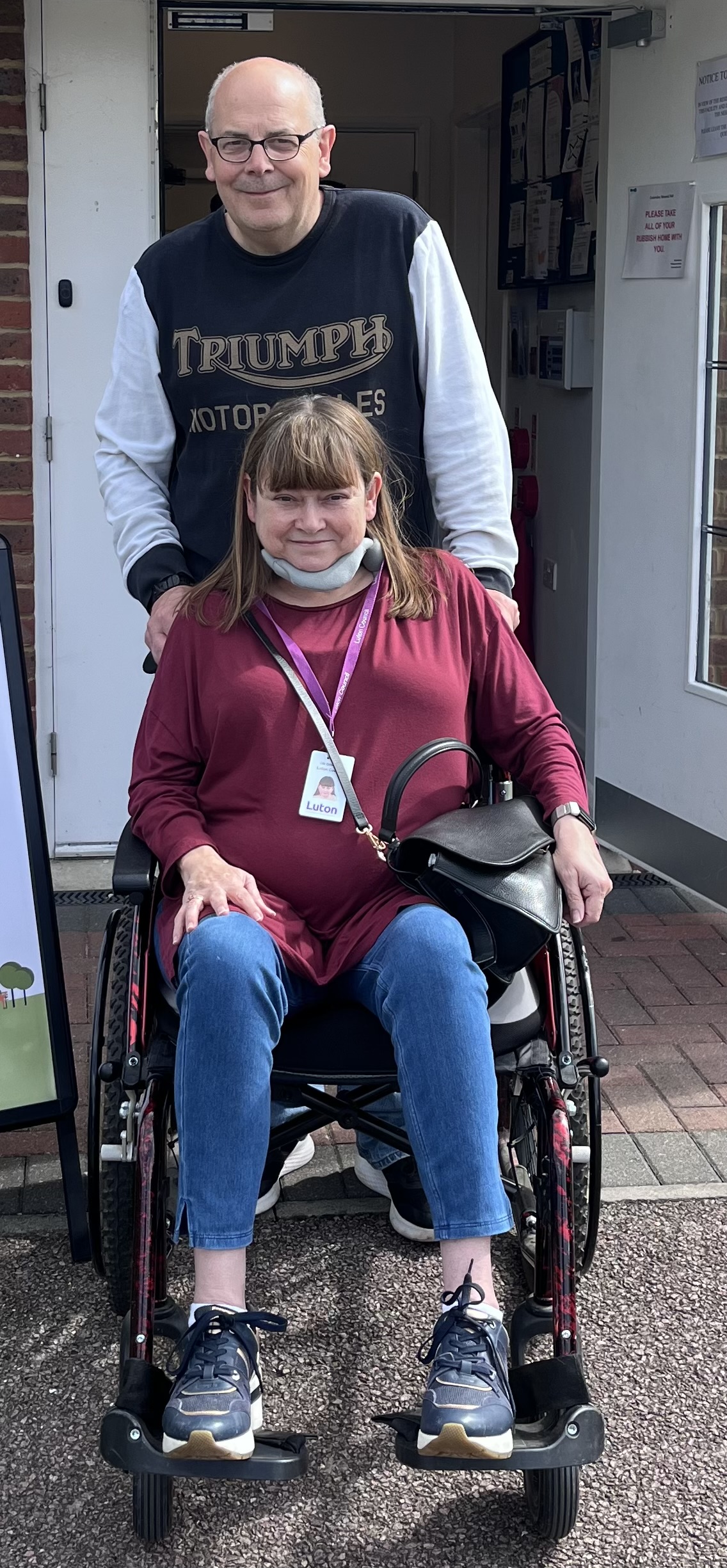
What’s quite frustrating sometimes is when we’re out, Gill is in the wheelchair and I’m pushing it, people will talk to Gill about how she’s feeling, which is right. But they’ll sometimes ignore me completely. Sometimes you just want someone to check in and ask how you’re doing too.
There are carer support groups where you can ask questions like, is this normal, or has anyone dealt with this problem and that does help. People there are supportive and they point you in the right direction. If you’ve got a problem, there’s usually someone who’s been through something similar. MND is such a broad thing. People go through the same stages at very different times and speeds. Knowing someone else has faced that stage is very reassuring.
There’s no handbook. No manual. No job description for being a carer. You’re just expected to figure it out. There’s no real understanding of how completely it takes over your life. Where you go. What you do. How everything revolves around the person you’re caring for.
I think caring has changed me in ways I didn’t expect. I’m much more organised now, especially when we go out. Everything has to be thought through like have we got all the equipment, have we got the right spoon so Gill can manage, are Gill’s medications packed, do we have her supports. I think Gill would say I’ve become less laid back. I’d probably agree.
If we had still had a mortgage now, I wouldn’t be able to do what I’m doing. We are not asking for sympathy. We’re very grateful for what we have. But we do have to count every penny. The only regular money coming in for me is the carer’s allowance. About £80 a week. That’s frustrating. I did everything right and yet there’s very little support. I was better off unemployed than being a carer, financially. That’s the reality of it.
Hair workshop and carer friendly community
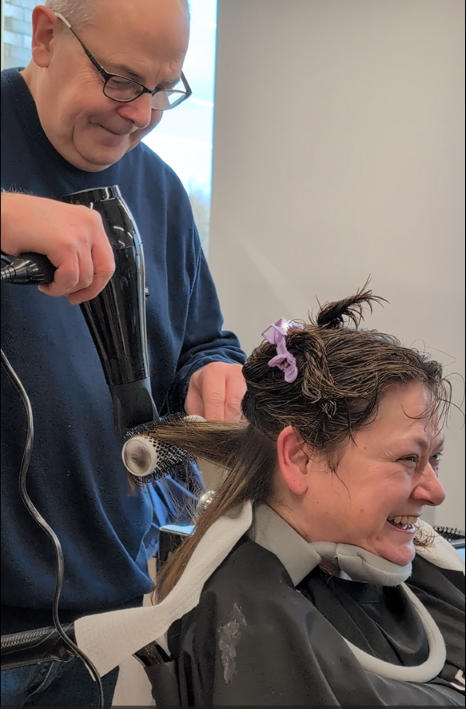
Gill’s hair has always been important to her. She’s very precious about it. She has a sensitive scalp and hates people touching her hair, so giving up control over that and letting me do it was a really big step for her. That wasn’t easy. When she realised she would no longer be able to do her hair, she wanted to help me learn how to do her hair. She realised in that moment there were likely other carers out there who would benefit from developing their personal grooming skills. So she reached out to our local college who actually have a hairdressing academy. Since then, we’ve done two workshops and I’ve learned how to wash, blow dry and now style Gill’s hair into a ponytail. It’s important to me that Gill feels good and her hair is a part of that. It’s one way I can make sure she still feels like herself when so much is being taken from her.
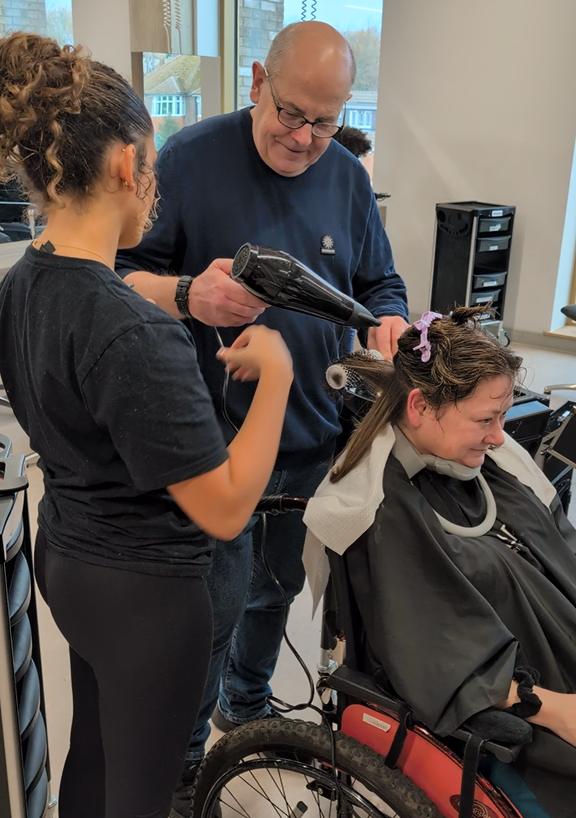
That’s Gill all over – thinking of others and wanting to help others. The workshops have been fantastic and have helped massively.
There’s something very particular about talking to other carers. You might never have met them, but they’ve watched their loved one deteriorate in the same way you’re watching yours. They understand what it’s like to go to bed one night and wake up with a slightly different person the next morning. It’s as if something’s been taken in the night. Something about their independence or their personality has shifted.
The community side of caring is so important. That reassurance is huge. I don’t think I could ask the same questions of people who aren’t carers. They haven’t taken that journey. It’s different talking to someone who’s already walked that road.
I don’t think people really understand what being a carer involves. They see you pushing a wheelchair but they don’t see the preparation. You don’t just jump in the car and pop out anymore.
Advice to others
If I could give advice to someone new to caring, it would be to get as much help as possible as early as possible. Speak to other carers who have already been on that journey. It’s not a comfortable conversation, because your loved one is deteriorating, but having an understanding of what might come next helps you prepare.
Don’t be scared to ask questions. That’s the key. You don’t know what you don’t know.
At the start, it’s hard to understand. It’s still hard to understand now. But talking to other people in the same situation really does help. Use the groups, use the apps and get as much support as you can.
It does feel like going into the unknown. Every case is different and every journey is different but knowing there is someone you can talk to when something goes wrong makes all the difference.
And you have to remind yourself that despite what you might think on the bad days, you are doing a good job. You are doing your best. Some days your best doesn’t look great, but it is still your best. And you’re doing it for love.